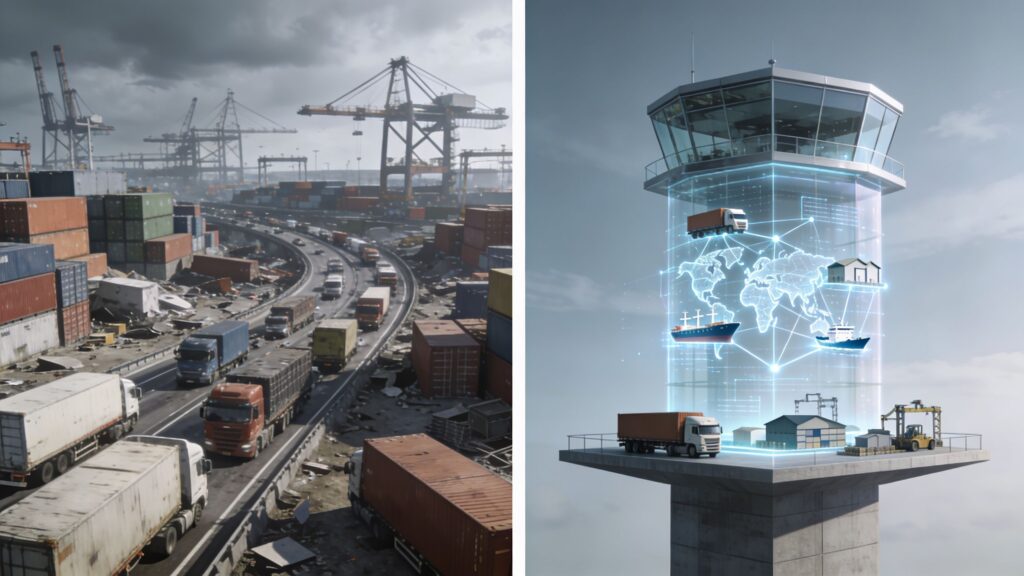
A shipment is late. Customer service is asking for answers. The plant manager wants to know whether production will stop. Procurement is calling the supplier. Logistics is checking carrier portals. Finance is already thinking about expediting costs.
Most leaders don't face a supply chain problem. They face an information problem. The issue isn't only that something went wrong. It's that no one sees the same picture at the same time.
That's where a control tower in supply chain operations changes the game. Think of it as air traffic control for a business network that spans suppliers, warehouses, transport lanes, customer orders, and internal teams. Instead of chasing updates across email threads, spreadsheets, and disconnected systems, you create one operating view that helps people spot risk early and act together.
The urgency is real. The global supply chain control tower market is projected to reach USD 32,138.4 million by 2030 with a 23.0% CAGR, according to Grand View Research's control towers market analysis. That projection says less about software hype and more about a shift in management style. Companies are moving from reacting to delays after the damage is done to managing flow, risk, and decisions in real time.
From Supply Chain Chaos to Command and Control
A common scene plays out like this. A high-priority order is supposed to arrive at a distribution site by morning. It doesn't. The carrier says the shipment is delayed. The supplier says it shipped on time. The warehouse doesn't know whether to reshuffle labor. Sales wants a revised delivery promise. No one is wrong, but no one is aligned.
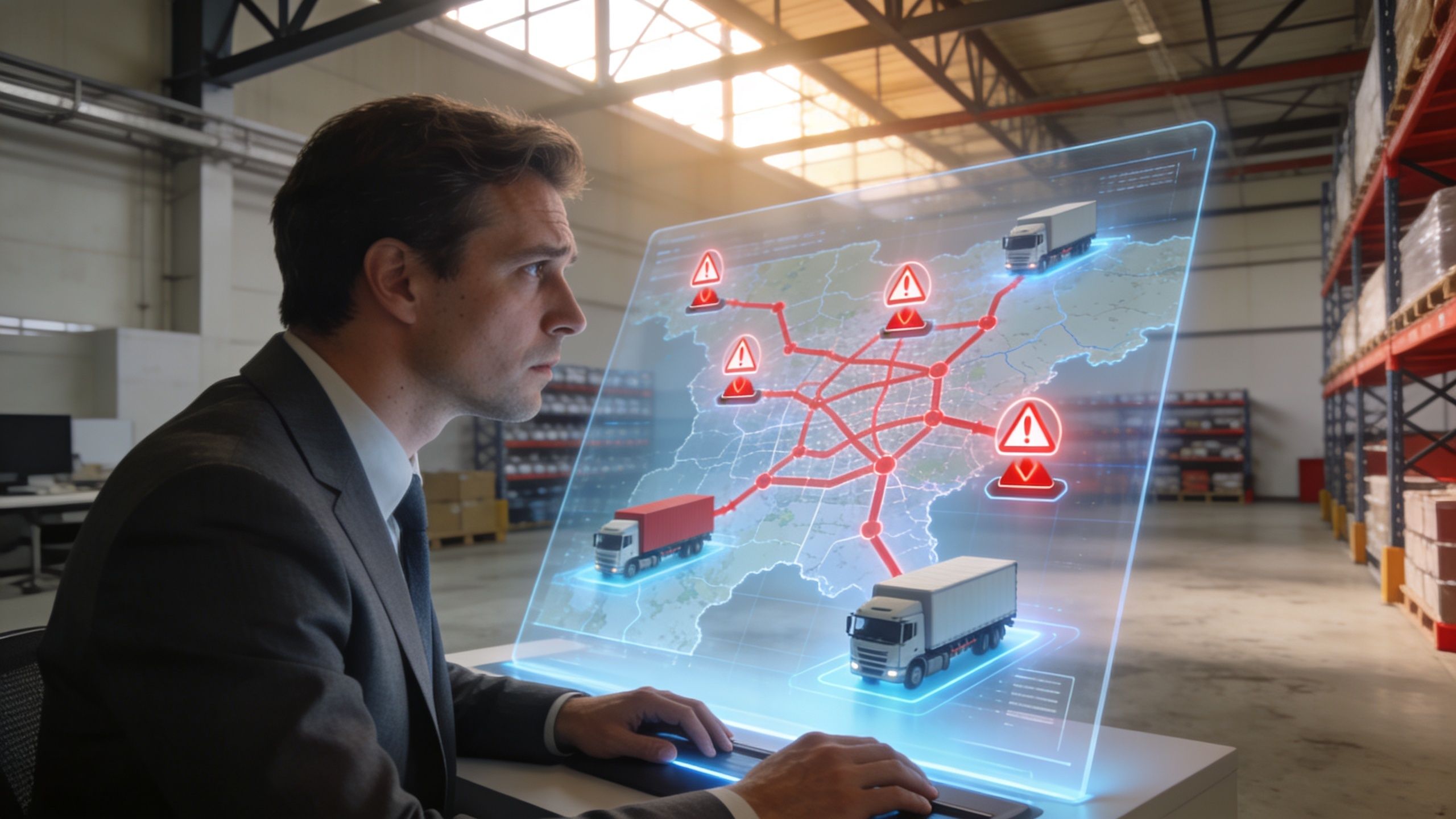
A control tower addresses that exact failure mode. It doesn't just show where things are. It creates a shared operating rhythm around what matters now, what may go wrong next, and who needs to respond. In practice, that means connecting shipment updates, inventory positions, supplier signals, and customer commitments so teams can make coordinated decisions instead of isolated guesses.
Why leaders keep coming back to this model
When readers first hear "control tower," they often assume it's just a visibility dashboard. That's too narrow. The better way to think about it is a decision environment.
Three things make it powerful:
- It reduces scramble: Teams stop wasting time reconciling conflicting updates from different systems.
- It improves response quality: Operations, procurement, and customer teams can act from the same facts.
- It creates accountability: When everyone sees the same signal, ownership becomes clearer.
A delayed shipment is rarely the hardest part. The harder part is the time lost while teams figure out who knows what.
Why this matters now
The market growth behind control towers reflects a broader operational reality. More companies now run complex networks with outsourced production, multiple carriers, shifting customer demand, and tighter service expectations. That complexity punishes organizations that still manage exceptions manually.
Leaders also want more than alerts. They want command and control. They want a system that tells them when a supplier issue could affect customer orders, when freight decisions could erode margin, and when a warehouse bottleneck will create downstream misses.
That is the promise of a control tower in supply chain management. It turns scattered events into usable signals, and usable signals into action.
What Exactly Is a Supply Chain Control Tower
At its simplest, a supply chain control tower is a centralized operating layer that helps a company see, understand, and coordinate activity across its supply chain network. It's not a single screen or one piece of software. It's a business capability built from data, workflows, analytics, and people.
A useful analogy is a mission control room. The room itself isn't the value. The value comes from what that room can observe, interpret, and coordinate. The same is true here. A control tower becomes valuable when it gives teams one trusted view of supply, inventory, logistics, orders, and exceptions.
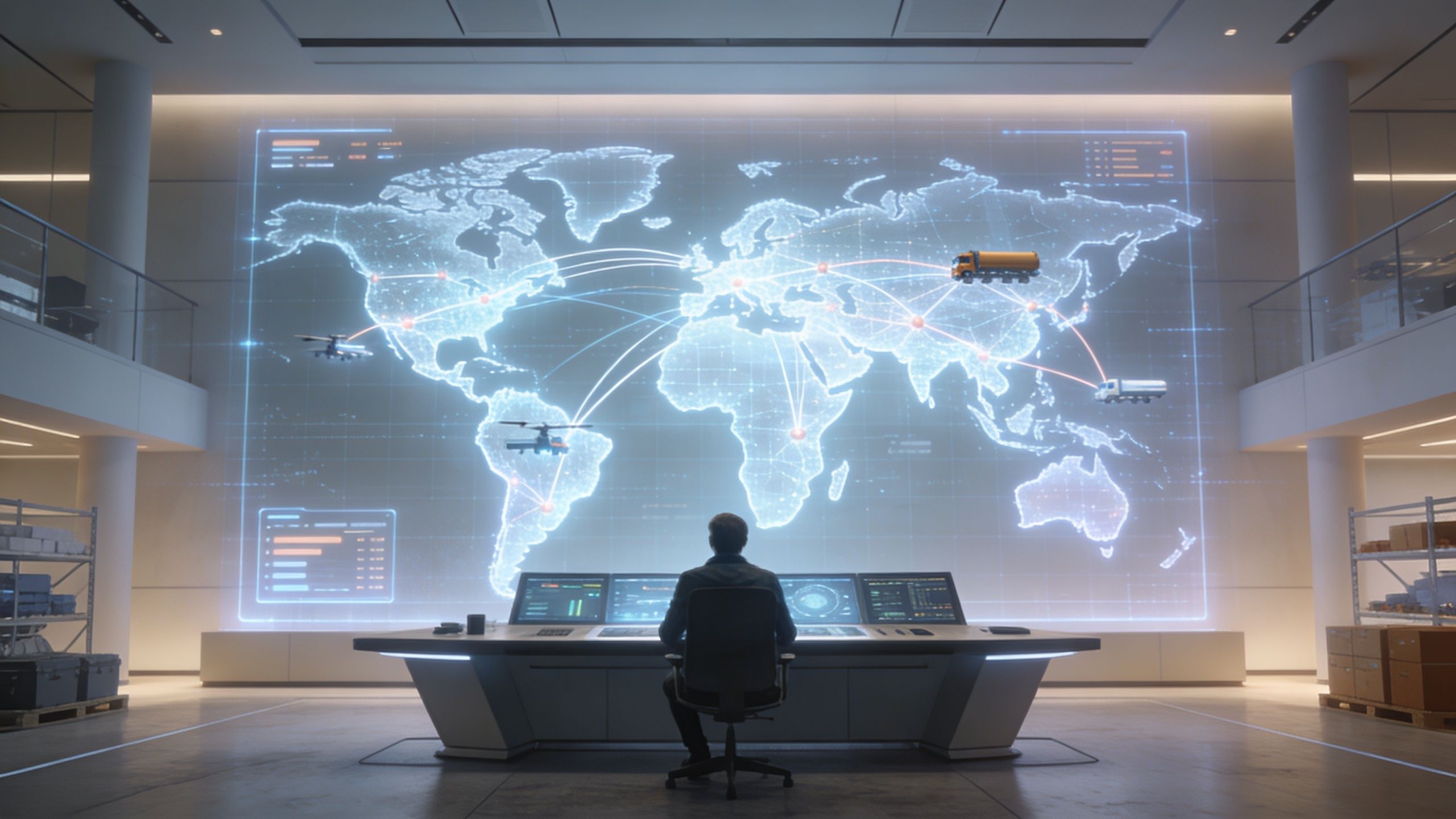
That visibility has direct economic value. By achieving end-to-end visibility, companies using supply chain control towers can drive 20-30% cost reductions by gaining granular control over hidden expenses like customs duties, unnecessary storage, and expedited shipping, according to Kinaxis on supply chain control tower value.
The first pillar is visibility
This is usually the first aspect understood. A control tower shows what's happening across orders, shipments, inventory, suppliers, and fulfillment activity.
But "visibility" doesn't just mean tracking a truck on a map. It means answering operational questions quickly:
- Order visibility: Is a customer order at risk?
- Inventory visibility: Where is available stock across locations?
- Supplier visibility: Which inbound materials may arrive late?
- Logistics visibility: Which shipments need intervention right now?
For logistics leaders trying to connect those moving parts with downstream fulfillment, this resource for logistics teams on fulfillment offers a helpful operational lens.
The second pillar is decision support
Seeing a problem is useful. Knowing what to do next is where the true value starts.
A mature control tower helps teams move from "what happened?" to "what should we do?" If a shipment slips, the system should help operations evaluate options such as reallocating stock, adjusting delivery promises, or changing transport plans. That turns raw visibility into managed execution.
Practical rule: If your tower only tells you bad news faster, it's incomplete. A strong tower helps teams choose a response.
The third pillar is collaboration
Supply chain failures often happen in the handoff between teams. Procurement sees one risk. Transportation sees another. Sales sees a customer promise. Without a common workspace, each group acts locally.
A control tower creates a shared source of truth. That matters because many disruptions are less about the disruption itself and more about fragmented response. One team expedites freight. Another team reallocates the same inventory. A third updates the customer too late. Central coordination prevents that kind of expensive confusion.
What a control tower is not
It helps to clear away a few misconceptions:
| Common assumption | Better interpretation |
|---|---|
| It's just a dashboard | It's an operating model for coordinated decisions |
| It's only for large enterprises | It's useful for any business with cross-functional supply chain complexity |
| It's only about transportation | It can span suppliers, inventory, production, fulfillment, and service |
| It replaces people | It helps people focus on exceptions that matter |
That's why the control tower in supply chain conversations has moved beyond pure tracking. Leaders want fewer surprises, faster decisions, and cleaner execution.
Choosing Your Model Centralized Virtual and Digital Towers
Not every control tower should look the same. The right model depends on the complexity of your network, the maturity of your data, and how much automation you're ready to trust.
Some organizations still prefer a physical command center with dedicated staff in one location. Others run a distributed control tower with cloud access and shared workflows. The most advanced aim for a digital model that can recommend, trigger, or automate actions.
Three models, three operating styles
A centralized tower usually brings people into one formal command structure. It's common when a company wants strong oversight, tight escalation paths, and visible ownership.
A virtual tower is more flexible. Teams may sit in different locations but work from one digital operating layer. This model fits companies that need coordination without building a physical center.
A digital tower pushes further. It still involves people, but it relies more heavily on integrated data, predictive signals, and automated workflows. The goal isn't only to inform humans. It's to shorten the distance between signal and action.
Comparison of Supply Chain Control Tower Models
| Model Type | Architecture | Best For | Pros | Cons |
|---|---|---|---|---|
| Centralized | A physical or formally centralized command team with shared processes and oversight | Organizations that need clear escalation, strong governance, and hands-on operational control | Clear accountability, strong routine management, easier executive oversight | Can become rigid, may require more staffing concentration, slower to scale across dispersed operations |
| Virtual | Cloud-based access across distributed teams using common workflows and dashboards | Companies with multi-site operations, outsourced partners, or hybrid work structures | Flexible staffing, easier collaboration across locations, lower dependency on one site | Success depends heavily on process discipline and data consistency |
| Digital | Highly integrated environment with predictive analytics and automated decision support | Firms pursuing faster exception handling and more autonomous operations | Better speed, stronger orchestration, scalable decision support | Harder to implement if data architecture is fragmented or governance is weak |
How to choose without overbuilding
Many teams get stuck because they treat the decision like a technology purchase. It isn't. It's a design choice about how your company wants to run supply chain decisions.
Ask these practical questions:
- How complex is the network? A business with a few stable nodes may not need a heavy centralized model.
- How fragmented is communication today? If teams already work across regions and partners, a virtual model may fit better.
- How ready is the data foundation? A digital tower won't perform well if core systems still conflict on basic facts.
- How fast do exceptions need action? High-variability operations benefit more from digital workflows than stable environments do.
Companies often choose the tower they admire instead of the one they can actually operate. Start with the model your data and teams can sustain.
A practical rule of thumb
If your biggest pain is fragmented communication, start by centralizing process ownership.
If your biggest pain is distributed execution, a virtual tower often makes more sense.
If your biggest pain is slow response to constant volatility, a digital tower becomes more compelling.
The best answer isn't always the most complex one. It's the one that helps your team act reliably under pressure.
The Technology Architecture Powering Modern Control Towers
A modern control tower works like a layered system. That matters because many executives look for a single product, when its true capability comes from how several pieces work together.
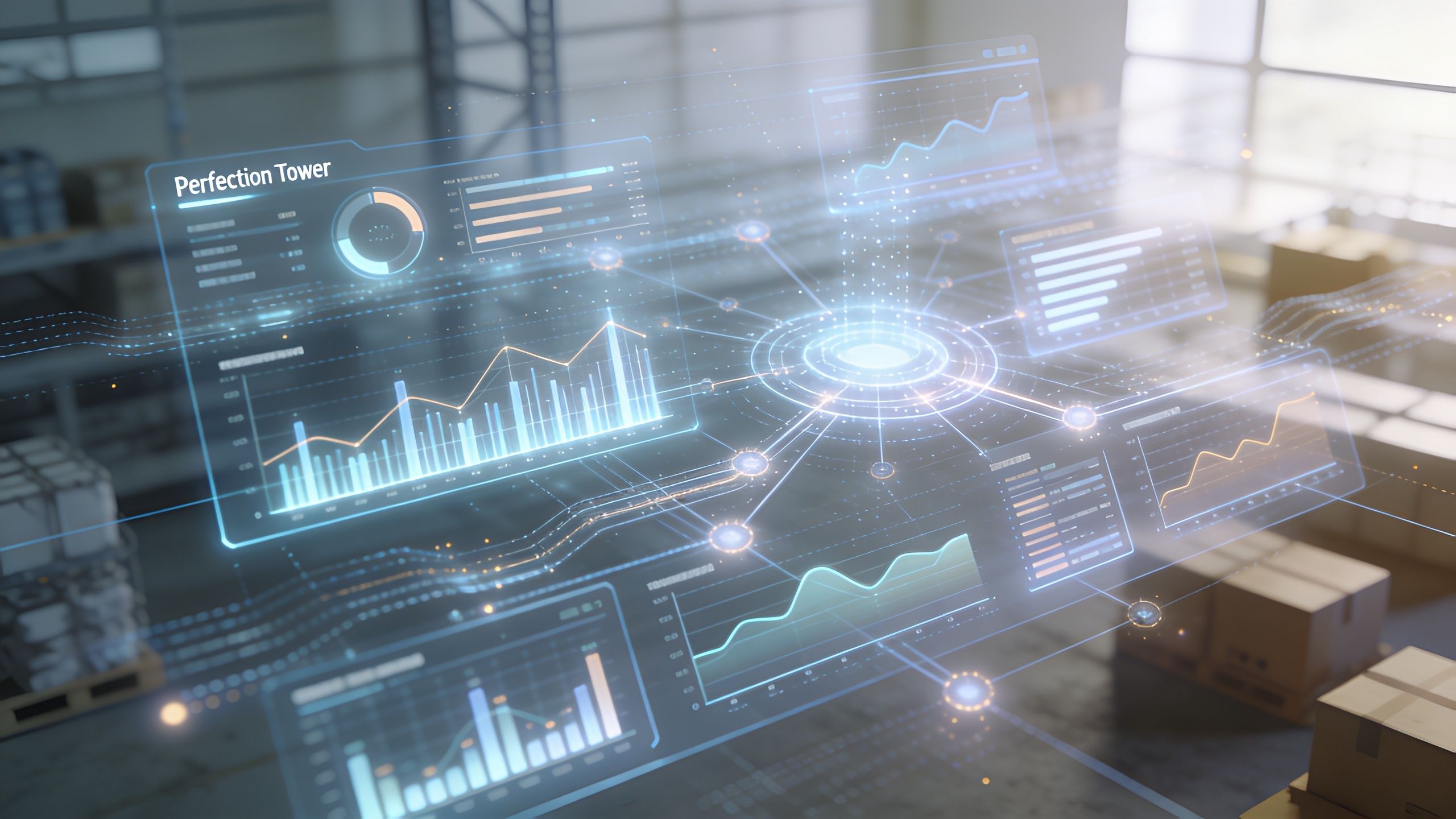
At the base, data must enter from operational systems and external partners. Then that data has to be standardized and connected. After that, teams need usable dashboards and exception views. On top of those layers sits the intelligence engine that helps forecast issues and guide action.
Layer 1 pulls in operational data
This layer gathers information from the systems that run day-to-day work. That usually includes enterprise resource planning, warehouse management, transportation, order management, and sensor or scan data from the physical flow of goods.
The goal isn't to collect data for its own sake. It's to create enough operational context to answer real questions. Where is the inventory? Which orders are delayed? What inbound supply is late? Which transport leg is creating risk?
A weak control tower usually starts with weak input data. If order dates are inconsistent or inventory records lag reality, the nicest dashboard in the world won't help much.
Layer 2 connects the systems
This is the integration fabric. It joins internal platforms, partner feeds, and external updates so the tower sees a coherent version of events rather than disconnected fragments.
Such scenarios often pose significant challenges for projects in practice. One system calls a shipment dispatched. Another still shows it planned. A supplier sends milestone data in one format. The warehouse uses another. Good integration design resolves those mismatches and governs how events become shared business facts.
If you want a clean way to think about those connections, this guide to integration design patterns is a useful reference for how systems can exchange data more reliably.
Layer 3 turns data into operational awareness
Once the data is connected, teams need views that support action. That means dashboards, alerts, work queues, and drill-downs designed around exceptions.
A useful tower view doesn't drown operators in detail. It answers questions in the sequence they arise:
- What happened
- What matters
- Who owns the next action
- What outcome should be tracked
This is also where route and delivery decisions often become easier to manage. For teams that want a practical primer on transport decision logic, these key concepts of route optimization fit naturally into the control tower conversation.
Layer 4 adds intelligence
Moving beyond visibility, the tower integrates AI and machine learning, enabling predictive exception handling. This can reduce response times to supply chain disruptions by up to 50% and lower inventory holding costs by 15-25%, according to Coursera's overview of supply chain control towers.
Those numbers matter because they describe what leaders want from the system. They don't want a prettier screen. They want earlier warning, faster response, and less capital tied up in inventory.
What the full stack does together
When the architecture is working well, the cause-and-effect chain is straightforward:
- Data arrives from supply, inventory, logistics, and order systems
- Integration standardizes it into a common operating view
- Analytics surfaces exceptions that need attention
- Intelligence recommends actions based on likely outcomes
- Teams execute faster because they aren't starting from scratch each time
The breakthrough isn't that a tower "has AI." The breakthrough is that teams can move from signal to action without rebuilding the story manually every time.
That is the actual architecture of a control tower in supply chain operations. It isn't one tool. It's an ecosystem designed to compress decision time.
Real-World Use Cases and Key Performance Indicators
A control tower becomes easier to understand when you stop thinking about software and start thinking about operating moments.
Consider a retail business managing store replenishment and direct-to-consumer orders at the same time. A supplier delay on a popular item creates a conflict immediately. Do you preserve inventory for stores, prioritize online orders, or split stock by margin and service promise? Without a control tower, those decisions often happen in separate teams with partial information. With one, the business can evaluate the tradeoff in one place.
A pharmaceutical distributor faces a different challenge. It isn't only about speed. It's also about shipment condition, handoff integrity, and service reliability. If an inbound delay threatens a downstream commitment, the tower helps operations identify which orders are exposed, which alternative inventory can cover demand, and which teams need to act first.
Where the value shows up in daily operations
The use cases vary by industry, but the pattern is consistent. A control tower helps when operations depend on synchronized decisions across multiple functions.
Common examples include:
- Retail fulfillment balancing: Teams align inventory allocation across channels when demand shifts unexpectedly.
- Manufacturing continuity management: Operations spot inbound material risk before it turns into line stoppages.
- Healthcare and cold-chain coordination: Teams monitor critical flow conditions and escalation points across sensitive shipments.
- Transportation exception handling: Planners identify late or high-risk moves and act before customer service gets the complaint.
- Supplier risk management: Procurement and operations assess upstream issues against downstream customer commitments.
The KPIs that matter most
Basic metrics still matter. Most leaders begin with service, inventory, and logistics performance.
Typical measures include:
| KPI | What it helps you understand |
|---|---|
| OTIF variance against sales commitments | Whether execution is matching the promise made to customers |
| Inventory turns | How efficiently inventory is flowing through the network |
| Emergency freight as a share of logistics spend | Whether poor planning or disruption is driving expensive transport choices |
| Lead-time variance | Where inbound or outbound timing is becoming unreliable |
These metrics are useful, but they don't always prove strategic value on their own. That's why more advanced control tower programs use KPIs that connect operational action to business impact.
The advanced metrics that prove ROI
Advanced control tower KPIs that prove ROI include yield recovery value, cross-functional coordination latency, and decision execution rate, according to DSV's expert view on control towers.
Those measures deserve plain-language translation:
- Yield recovery value asks how much value the business protected by avoiding stockouts or mitigating disruptions.
- Cross-functional coordination latency measures how long it takes to move from signal to aligned response.
- Decision execution rate shows whether recommended actions are being carried out.
A strong business case doesn't stop at "we have better visibility." It shows how quickly the organization converts visibility into action and action into avoided loss.
A good scorecard mixes old and new
One mistake I see often is overloading the tower with too many metrics at launch. A better approach is to combine a few familiar measures with a few decision-focused ones.
For example, a company might track:
- Service reliability through OTIF-related performance
- Cost pressure through emergency freight and storage issues
- Working capital through inventory flow measures
- Response effectiveness through coordination latency and execution rate
That scorecard tells a more complete story. It shows not only whether the network is performing, but whether the control tower itself is improving how the organization responds.
Implementing a Control Tower A Phased Maturity Model
Most control tower programs fail when leaders try to jump straight to an advanced end state. They want predictive alerts, automated workflows, and cross-enterprise visibility before the underlying data and decision processes are stable.
A better approach is phased maturity. Build the operating discipline first. Then add intelligence and automation as the system earns trust.
Phase 1 starts with business objectives
The first question isn't which dashboard to buy. It's which operational problems need solving.
For one company, the initial goal may be transport visibility. For another, it may be supply risk on critical materials. For a third, it may be customer order reliability. The scope should start narrow enough that teams can define ownership, align data, and produce a usable operating rhythm.
Early implementation work usually includes:
- Choosing the first use case: Pick one area where the pain is visible and the business case is understandable.
- Defining decision owners: Clarify who acts when the tower flags a risk.
- Assessing data readiness: Check whether core records are timely, consistent, and trusted.
- Setting a small KPI set: Measure whether the first phase is changing behavior.
Phase 2 creates reliable visibility
Once the first use case is chosen, the next milestone is dependable visibility. This stage is often more work than leaders expect because it requires agreement on definitions, event logic, and workflows.
A shipment isn't "late" unless the organization agrees on planned date, actual event timing, and escalation threshold. Inventory isn't "available" unless reservations, quality holds, and transfer timing are all handled consistently. This is where governance matters.
Teams that need a structured framework for readiness often benefit from reviewing a data maturity model before they attempt advanced tower capabilities.
Phase 3 adds prediction and recommendation
Only after visibility becomes dependable should the tower begin taking on predictive work. At this stage, systems start surfacing likely disruptions before they materialize fully.
That progression matters because a major challenge for SMEs is the transition from visibility-focused control towers, which provide insights, to autonomous execution platforms that automate actions. That gap is often caused by inflexible data architectures and limited AI integration resources, as described in FanRuan's perspective on supply chain control towers.
At this stage, the tower can start answering richer questions:
- Which inbound delay is most likely to affect customer delivery?
- Which orders should be prioritized if supply tightens?
- Which mitigation action is operationally feasible right now?
Phase 4 moves toward orchestration
The highest maturity level isn't just predictive. It's prescriptive and increasingly autonomous.
That doesn't mean removing humans from decisions. It means the system can prepare the action path. It can route alerts, recommend alternatives, trigger workflows, and reduce the manual effort required to coordinate a response.
Don't confuse maturity with complexity. Mature control towers simplify decisions because the hard integration and governance work has already been done.
Common obstacles that slow progress
The barriers are usually organizational before they are technical:
- Data silos: Teams still operate from different records and definitions.
- Change resistance: People don't trust a central workflow until it proves useful.
- Talent gaps: Good analysts, integration specialists, and process owners are hard to find.
- Scope creep: Leaders add too many use cases before the first one is stable.
The companies that make progress are usually the ones that start with one painful process, one shared KPI set, and one disciplined operating cadence.
Accelerate Success with a Strategic Outsourcing Partner
The hardest part of building a control tower usually isn't the concept. It's the resourcing.
Companies need integration support, workflow design, data cleanup, analytics capability, and often day-to-day operational staffing to monitor exceptions and coordinate follow-up. Many SMEs and mid-market firms understand the value but can't justify building every capability internally at once.
That's why a strategic outsourcing model can be so effective. It lets a company move faster without waiting to hire every specialist in-house.
Where external support adds the most value
The pressure points are predictable. Teams often need help in three areas:
- Implementation support: Connecting systems, cleaning data, and structuring the first operational workflows
- Tower staffing: Providing analysts or coordinators who can run dashboards, triage exceptions, and maintain operating discipline
- Managed services: Taking responsibility for recurring control tower activities so internal teams can focus on planning, suppliers, and customers
This matters even more because effective AI and machine learning integration for predictive disruption management is a common failure point. Many firms struggle with rigid data architectures, creating an opening for expert partners to bridge the gap with scalable cloud and GenAI services, as discussed in Cognizant's paper on harnessing control towers for global supply chain excellence.
Why a US-based outsourcing partner is especially valuable
If your supply chain spans multiple time zones and external parties, location and operating style matter. A US-based outsourcing partner offers practical advantages that business leaders often underestimate.
Those benefits include:
- Stronger communication alignment: Escalations, meetings, and issue reviews are easier when key stakeholders can work in overlapping business hours.
- Better executive access: Operations leaders and finance teams can review performance and decisions without long delays.
- Clearer accountability: Shared legal and commercial expectations often make governance smoother.
- More reliable quality control: It is easier to standardize process reviews, service expectations, and data handling across managed workflows.
- Safer handling of sensitive processes: Many firms prefer US-based oversight for operational, customer, and financial workflows.
For organizations that want to pair control tower execution with broader process support, these business process outsourcing solutions give a useful picture of how outsourcing can extend beyond narrow staffing.
What good partnership looks like
A good partner shouldn't only provide labor. The partner should help create repeatable operating discipline.
That means building playbooks, defining escalation rules, improving data quality, documenting workflows, and making sure the tower doesn't become another screen that people ignore. The right support model can also flex with demand, which matters when a company is scaling, entering new channels, or managing ongoing volatility.
The smartest outsourcing decision isn't "Who can do this cheapest?" It's "Who can help us build a control tower that people will actually use under pressure?"
For many firms, that is the difference between a promising pilot and a durable operating capability.
If you're evaluating how to build, staff, or manage a control tower in supply chain operations, NineArchs LLC can help as a US-based outsourcing partner for implementation support, skilled staffing, and managed services. Contact NineArchs at (310)800-1398 / (949) 861-1804 or email info@ninearchs.com to discuss a practical model that fits your operations, timeline, and internal team capacity.