

You’re probably not struggling because your team lacks effort. You’re struggling because too much of the supply chain still depends on people chasing information across email threads, spreadsheets, carrier portals, paper packing slips, and disconnected systems.
A buyer updates a purchase order, but the warehouse doesn’t see the change in time. A shipment gets delayed, but customer service learns about it only after the customer asks. Inventory shows available in one file and unavailable in another. Someone rekeys data from one system into the next, and a single typo turns into an invoicing issue, a picking error, or a stockout. For most small and midsized businesses, that isn’t a rare bad day. It’s the operating model.
Automation supply chain work matters because it fixes that operating model. Not with hype, and not by dropping robots into a broken process, but by making planning, execution, and follow-up more connected, more accurate, and easier to manage. The companies that get value from automation usually start small, target the most painful bottlenecks first, and build around better data flow rather than chasing flashy features.
The Growing Pressure on Your Supply Chain
A familiar scene plays out in many SMEs. The owner starts the day by checking stock manually because the inventory report can’t be trusted. By mid-morning, the team is calling carriers for shipment updates. In the afternoon, finance is fixing invoice mismatches caused by manual entry. By evening, customer service is apologizing for delays nobody saw early enough to prevent.

That kind of friction costs more than labor hours. It slows decisions, creates avoidable errors, and wears down good people. It also makes growth risky. Every new SKU, supplier, lane, and customer requirement adds complexity that manual workflows can’t absorb for long.
Why the pressure keeps building
Supply chains are under pressure from both sides. Customers expect faster, clearer updates, while operations teams have to manage more variables across sourcing, transportation, warehousing, and finance. Manual work doesn’t just become inefficient in that environment. It becomes a bottleneck.
The broader market reflects that shift. Global investment in supply chain automation is projected to grow from approximately USD 14.5 billion in 2024 to about USD 36.5 billion by 2032, reflecting a CAGR of roughly 12.9% according to Future Market Report’s supply chain automation market analysis. That matters because automation has moved out of the experimental category. It’s becoming part of baseline operational discipline.
What practical operators do first
Most businesses don’t need to automate everything at once. They need to remove the points where work repeatedly stalls.
- Start with recurring pain: Look for the handoffs that generate the most rework, such as order entry, shipment tracking, invoice matching, or replenishment decisions.
- Fix visibility before speed: Faster bad data only creates faster mistakes.
- Use proven operating habits: If cross-border logistics is part of your challenge, Upfreights' advice for China logistics is a useful example of process discipline around planning, documentation, and coordination.
The first win in automation usually isn’t dramatic. It’s fewer surprises.
What Is Supply Chain Automation Really
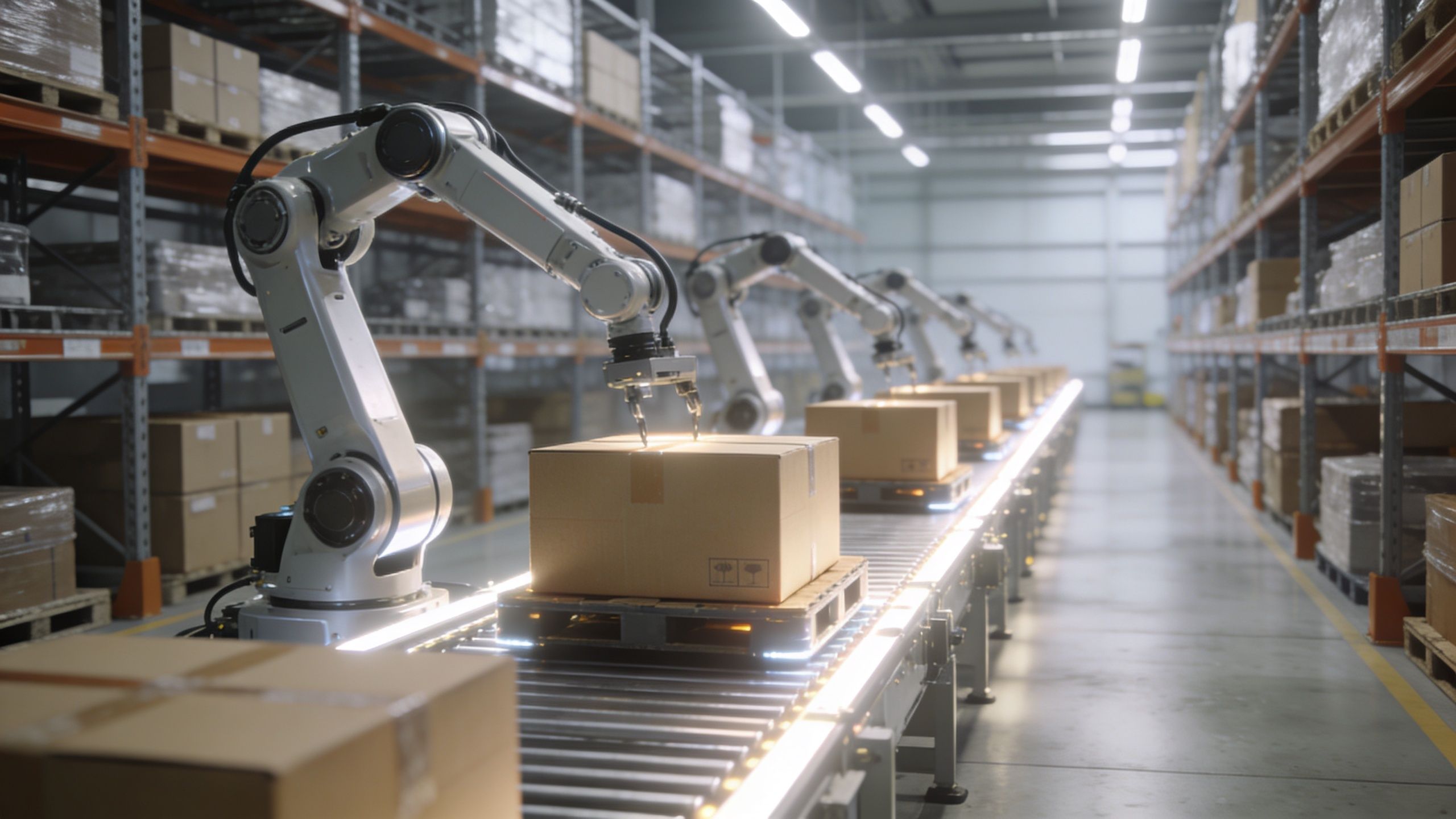
Many people hear “supply chain automation” and think of robots in a warehouse. That’s only one piece of it. In practice, automation supply chain work is about creating a connected operating system for planning, movement, tracking, and financial follow-through.
A simple analogy helps. A manual supply chain works like a line of people passing buckets by hand. Information moves slowly, each handoff introduces risk, and the whole chain depends on constant supervision. An automated supply chain works more like a monitored utility network. Data flows to the right place, tasks trigger in sequence, exceptions surface quickly, and people step in where judgment is needed.
Digitized isn’t automated
A lot of companies think they’ve automated when they’ve only digitized.
- Digitization: Paper forms become digital files.
- Digitalization: Teams use software to manage work that used to be manual.
- Automation: Systems take action based on rules, real-time data, and workflow logic with limited manual intervention.
That distinction matters. A spreadsheet attached to an email is digital. It isn’t automated. A system that updates inventory after receipt, flags a mismatch, routes the exception to the right person, and adjusts the downstream order status is much closer to real automation.
What the system is supposed to do
At its best, supply chain automation helps a business do four things reliably:
Capture data once
Good automation reduces duplicate entry and conflicting records.Move information in real time
Planning, warehouse, transportation, procurement, and finance shouldn’t all be waiting on separate updates.Trigger standard actions
Reorder points, shipment alerts, document generation, invoice checks, and exception routing should follow defined rules.Escalate only the exceptions
Humans should spend their time on unusual events, supplier issues, customer trade-offs, and planning decisions.
Automation should remove routine effort, not remove accountability.
Where human judgment still matters
Smaller firms often misinterpret automation's role. They assume automation replaces people. In reality, it changes the work. Someone still needs to review exceptions, validate supplier commitments, decide how to respond to a delay, and tune the rules when conditions change.
That human layer becomes more important as automation expands. The strongest implementations don’t try to eliminate planners, coordinators, or finance staff. They let those people spend less time copying data and more time managing outcomes.
The Core Technologies Powering Modern Supply Chains
The technology stack behind an automation supply chain doesn’t need to be exotic. It needs to be connected. Most successful programs combine workflow automation, real-time tracking, analytics, and execution systems so the business can sense, decide, and act without waiting for manual updates.
The core building blocks
Robotic Process Automation, or RPA handles repetitive digital tasks. In supply chain operations, that usually means activities like moving order data between systems, validating fields, generating invoices, processing confirmations, or updating shipment records. RPA is valuable when the process is stable and rule-based. It’s a poor fit when the input is inconsistent or the process changes every week.
IoT and sensor-based tracking give operations teams a live view of inventory movement, asset location, and condition. In practical terms, that means knowing whether a shipment has moved, whether a cold-chain threshold has been breached, or whether a piece of equipment needs attention before it fails. The point isn’t just visibility. It’s faster intervention.
AI and machine learning help businesses detect patterns that manual planning misses. One useful application is forecasting. Hyper-automation, the convergence of AI, ML, and RPA, enables dynamic inventory optimization and predictive demand forecasting, and manufacturers implementing this can predict demand spikes weeks in advance based on unified data patterns from ERP, WMS, and supplier portals, as described in Lowry Solutions’ supply chain automation guide.
Warehouse and transportation execution systems turn plans into operational control. These systems help manage receiving, putaway, picking, dispatch, routing, and shipment status. They matter most when they’re integrated with inventory, order, and finance data rather than operating as isolated control panels.
Comparing Core Automation Technologies
| Technology | Primary Function | Best For |
|---|---|---|
| RPA | Automates repetitive digital tasks and data movement | Invoice processing, order updates, document handling, routine back-office workflows |
| IoT | Captures real-time operational signals from assets and shipments | Tracking location, condition, temperature, and equipment status |
| AI and ML | Finds patterns and supports prediction and decision logic | Forecasting demand, prioritizing exceptions, optimizing inventory |
| WMS and TMS | Coordinates warehouse and transportation execution | Daily fulfillment, dispatch control, shipment movement, operational status management |
What works and what doesn’t
What works is sequence. First clean up process logic. Then connect the data. Then automate the flow. What doesn’t work is layering advanced analytics on top of inconsistent master data and broken handoffs.
For warehouse-heavy businesses, physical automation may be part of the answer. If you’re evaluating denser storage and faster retrieval, this resource on optimizing warehouse logistics with ASRS gives useful context on how automated storage fits broader warehouse design decisions.
A control-tower mindset also helps. Instead of asking whether one department has a better dashboard, ask whether the business has a common operational view. That’s the logic behind a control tower in supply chain operations, where events, status, and exceptions are visible across functions.
If one system “automates” a task but forces another team to reconcile the output manually, you haven’t automated the chain. You’ve moved the burden.
The Transformative Business Benefits of Automation
The business case for automation gets stronger when you stop talking about technology and start talking about cost discipline, resilience, and service reliability.
Cost reduction that finance can actually see
Manual supply chains hide waste in plain sight. It shows up in expedite fees, excess stock, avoidable labor, invoice correction, and time spent searching for basic status information. Automation reduces that waste by making routine decisions and updates more consistent.
There is hard evidence behind that claim. Early adopters of AI in supply chain management report a 15% reduction in logistics costs, a 35% decrease in inventory levels, and a 65% gain in service efficiency, according to Procurement Tactics’ supply chain statistics summary.
Resilience improves when decisions happen faster
Resilience isn’t a slogan. It’s the ability to react before a delay turns into a shortage or a customer problem. Automated workflows help because they shorten the gap between event and response. A missed supplier commitment, damaged shipment, or replenishment risk can move from hidden issue to visible exception much faster.
That’s one reason companies invest in broader process automation, not just warehouse tools. Stronger workflow design supports cleaner approvals, fewer handoff failures, and quicker action across departments. This overview of business process automation benefits is useful if you’re trying to connect operational automation with cross-functional process improvement.
Customer experience gets steadier
Customers don’t care whether your issue started in procurement, warehouse operations, or billing. They care whether the order arrives correctly and whether your team communicates clearly when something changes.
Automation helps by improving consistency. Orders are more likely to move through the right checkpoints. Status is easier to retrieve. Exceptions reach the right person sooner. Service improves because the process becomes easier to manage, not because software somehow creates customer loyalty on its own.
- Better order follow-through: Fewer manual touchpoints usually mean fewer preventable errors.
- More reliable updates: Teams can answer questions with current information instead of partial guesses.
- Less internal firefighting: Customer-facing staff spend less time hunting for answers.
Building Your Implementation and Change Management Roadmap
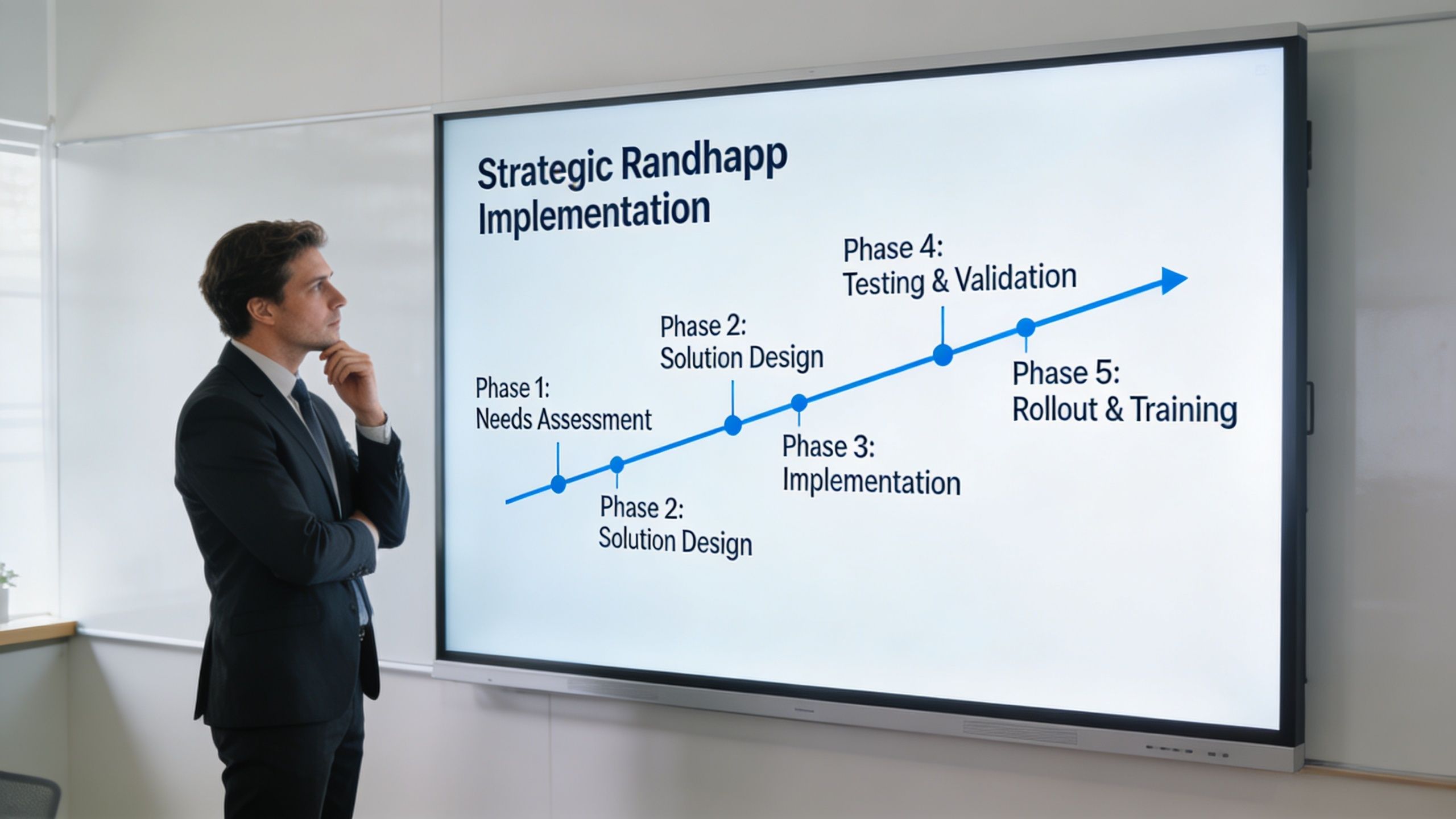
Most automation projects fail for ordinary reasons. The business picked too many targets at once, ignored process design, underestimated data cleanup, or assumed employees would “figure it out” after go-live. A better roadmap is narrower, slower at the start, and much more deliberate.
Start with the ugliest bottleneck
Don’t begin with the process that looks best in a demo. Begin with the one that causes repeat pain and has clear rules. Good candidates include order entry, PO acknowledgment follow-up, shipment status collection, invoice validation, or replenishment alerts.
A simple prioritization lens helps:
- High pain, low complexity: Do these first.
- High pain, high complexity: Break them into phases.
- Low pain, high complexity: Leave them alone until the foundation is stronger.
Pilot before you scale
A pilot should prove three things. First, the process really can be standardized. Second, the data is good enough to support automation. Third, the people who own the process can work with the new flow without creating workarounds outside the system.
This is also where partner choice matters. Some SMEs need implementation support, some need workflow staffing, and some need both. One practical option is a blended model where a provider handles process support, IT integration, and back-office execution. NineArchs LLC provides services across software development, cloud support, BPO, virtual assistant operations, and finance workflows, which can fit companies that need both technical build-out and day-to-day operational support.
Practical rule: If a pilot needs heroic effort from one internal champion, it isn’t ready to scale.
Redesign jobs, not just systems
The human side is where many automation programs stall. Teams worry about job loss, managers keep old approval habits, and nobody owns exception logic. That creates confusion even when the software works.
A healthier model is a hybrid one:
Planners review recommendations
They don’t rebuild every forecast manually.Coordinators manage exceptions
They focus on issues that rules can’t resolve cleanly.Finance staff validate outcomes
They spend less time on entry and more time on control.Operations leaders monitor rule quality
They adjust thresholds, escalation paths, and handoffs as reality changes.
De-risk the automation supply chain itself
There’s another risk many firms miss. The technology behind automation has its own supply chain. Industrial automation faces its own supply chain challenges, with constrained capacity for components like semiconductors and controllers creating volatile lead times. Businesses must de-risk their automation procurement through strategies like dual-sourcing and modular design, as noted in Lean-IQ’s analysis of industrial automation supply chain fragility.
That means your roadmap should account for procurement risk too. Modular design, substitute-ready components, and realistic rollout timing matter. So does system architecture. If your automation plans depend on cleaner operational data, a cloud-based ERP for manufacturing often becomes part of the foundation rather than a separate future project.
Measuring Success and Managing Hidden Risks
Implementation isn’t the finish line. It’s the point where governance starts to matter. A lot of businesses automate a process, see a short burst of improvement, and then lose confidence because nobody defined what success should look like or how to monitor drift.
Track the right operating signals
The useful KPIs are usually straightforward:
- Order accuracy rate: Are orders getting fulfilled correctly the first time?
- Inventory accuracy: Does recorded stock match physical stock closely enough to support planning and fulfillment?
- Process cycle efficiency: How much of the total process time adds value versus waiting, rework, and handoff delay?
These measures tell you whether automation is improving execution or speeding up a flawed flow.
Visibility gaps can break a good design
One of the most common blind spots sits outside your own walls. According to KPMG data, 43% of organizations have zero visibility of their tier-one supplier performance, a problem highlighted in RTS Labs’ discussion of supply chain automation and real-time tracking. If supplier status is opaque, your internal workflows will still be reacting late.
That’s why the phrase “single source of truth” matters in practice. It means procurement, warehouse, transportation, customer service, and finance are working from aligned records and current status. Without that, teams create their own side files, and automation starts producing conflicting outputs.
Good automation exposes process weakness quickly. That’s not failure. It’s a chance to fix the real constraint.
Watch for subtle failure modes
The hidden risks usually aren’t dramatic. They’re operational.
- Rule drift: The process changes, but the automation logic doesn’t.
- Exception overload: Too many alerts reach humans because thresholds weren’t tuned well.
- Shadow work: Employees keep parallel spreadsheets because they don’t trust system output.
- Bad master data: The workflow runs correctly, but the underlying data is wrong.
The answer isn’t more dashboards. It’s ownership. Someone needs to own data quality, someone needs to own exception design, and someone needs to decide when the process itself needs revision.
Scaling Smart How a US-Based Partner Accelerates Your Journey
Most SMEs shouldn’t try to build an automation supply chain program entirely on their own. Not because they lack talent, but because supply chain automation cuts across operations, software integration, finance controls, documentation, and workforce design. That’s a lot to coordinate while still running the business.
A US-based outsourcing partner can reduce that strain in practical ways. Communication is easier. Project cadence is clearer. Escalations move faster. There’s usually better alignment on business expectations, reporting style, compliance discipline, and customer-facing standards. For businesses trying to automate without creating confusion, that operating fit matters.
This matters even more when your needs span both technology and ongoing execution. Many firms don’t just need developers. They need people who can support workflows after launch, manage documentation, handle finance operations, maintain data quality, and keep the process moving when exceptions occur. If your internal team is deciding how to staff the technical side, guidance on how to hire full-stack developers can help frame what should stay in-house versus what should be supported through a partner model.
The strongest partnerships don’t sell automation as a one-time install. They support rollout, stabilization, and day-to-day operations so your team can focus on planning, customers, and growth rather than endless reconciliation.
If you’re ready to make your supply chain more accurate, scalable, and easier to run, NineArchs LLC can help with the technical build-out and operational support behind a smarter automation strategy. Call (310)800-1398 / (949) 861-1804 or email info@ninearchs.com to discuss your goals.