
Customer service problems rarely arrive as a single dramatic failure. They show up as a pattern. A few more complaints than usual. Supervisors saying one team is “off” this week. Customers calling back because the first answer didn’t solve the issue. Leaders can feel the drag on the business long before they can explain it.
That’s the dangerous part. Many support operations run like a black box. Calls are being answered, tickets are being closed, and dashboards still look busy, but nobody can clearly say why customer loyalty is slipping or why agent performance feels inconsistent. The organisation reacts to symptoms instead of fixing causes.
A strong call centre quality analyst changes that. The role isn’t just about listening to calls and checking boxes. It’s about turning daily conversations into operational evidence. The analyst identifies where customers get confused, where agents struggle, where scripts fail, and where process design creates repeat work. In teams investing in connected customer service, that kind of visibility becomes even more valuable because service quality depends on how well channels, teams, and systems work together.
When this role is done well, quality assurance stops being an audit exercise. It becomes a practical management function that protects revenue, improves morale, and gives leaders a clear view of what customers are experiencing.
Beyond the Headset The Unseen Engine of Customer Loyalty
A familiar pattern plays out in growing service teams. Customer complaints rise, but no one agrees on the reason. One manager blames staffing. Another blames training. Operations says agents are taking too long. Team leads say agents are rushing and creating repeat contacts.
In that environment, the call centre quality analyst becomes the person who can separate noise from signal.
A good analyst listens for what raw volume reports miss. They hear when customers are repeating themselves because authentication takes too long. They spot when a script technically meets policy but sounds robotic enough to frustrate callers. They notice when agents are following the process exactly, yet the process itself is creating avoidable friction.
The most useful QA findings don’t start with “the agent failed.” They start with “the system made success harder than it should be.”
That distinction matters. If quality assurance only looks for fault, teams hide problems. If it looks for root causes, teams improve faster.
What leaders usually miss
Service issues often look like agent performance problems when they’re operating model problems. A billing policy may be too complex. A knowledge base article may be unclear. A handoff between support and back office may be creating delays customers interpret as incompetence.
The analyst sits close enough to the front line to hear those patterns, but far enough from the immediate pressure of queue management to assess them objectively.
Common examples include:
- Repeat contacts disguised as demand growth: More calls don’t always mean more customers. They can mean unresolved issues.
- Script adherence without customer confidence: Agents may say the required words and still leave customers unsure.
- Long calls with good intent but weak structure: An empathetic conversation isn’t automatically an effective one.
- Escalations caused by policy wording: Customers often react to how a rule is explained, not just the rule itself.
Why this role protects loyalty
Customer loyalty is built in small moments. A clean handoff. A clear explanation. A problem solved without a callback. Those moments rarely improve by accident. They improve when someone consistently studies what’s happening in real interactions and feeds that insight back into coaching, process design, and leadership decisions.
That’s why the unseen engine of customer loyalty usually isn’t a louder performance push. It’s a sharper quality function.
Defining the Modern Call Centre Quality Analyst

The outdated version of the role is easy to recognise. A reviewer listens to a few calls, checks whether the script was followed, assigns a score, and moves on. That model creates compliance records, but it doesn’t create much operational value.
The modern call centre quality analyst does far more. The role now combines evaluation, pattern recognition, coaching support, and business feedback. Historically, call center QA evolved from simple monitoring in the 1980s to data-centric analysis, driven in part by agent turnover of 30-45% annually and the shift toward outcome-focused KPIs such as First Call Resolution and Net Promoter Score (hear.ai on the evolution of call center QA metrics).
What the role actually owns
A modern analyst doesn’t just answer, “Did the agent follow the process?”
They also answer questions like:
- Where is customer effort increasing
- Which failure points repeat across teams
- What should be coached immediately
- Which process gaps are creating avoidable contacts
- What leadership needs to fix outside the contact centre
That makes the analyst a bridge between frontline reality and management action.
From call monitor to strategic analyst
The difference comes down to how the work is used.
| Old view | Modern view |
|---|---|
| Checks calls for mistakes | Diagnoses interaction patterns |
| Focuses on script adherence alone | Balances compliance, resolution, and customer experience |
| Reports on individual agents | Surfaces team, workflow, and policy issues |
| Works after the fact | Supports continuous improvement |
| Operates as an auditor | Operates as an operational advisor |
This shift matters because customer conversations contain business intelligence. Product confusion, pricing objections, service breakdowns, and recurring friction all show up in support interactions before they reach boardroom discussions.
For leaders trying to extract more value from conversations, a useful companion perspective is using AI for actionable business insights. The important point isn’t the technology itself. It’s the mindset that conversations are a source of operational truth, not just a service record.
What strong analysts do differently
The best analysts tend to share three traits:
- They score with context: They know when a short call is efficient and when it means the customer was brushed off.
- They write findings that managers can act on: “Low empathy” is weak feedback. “Agents skip expectation-setting during refund calls, which creates escalations later” is useful.
- They stay credible with agents: They don’t weaponise scorecards. They use them to improve performance fairly.
Practical rule: If a QA note can’t lead to a specific coaching action, process fix, or policy decision, it’s probably too vague.
A business that understands this role correctly stops treating QA as overhead. It starts treating it as an early-warning system for churn, inconsistency, and wasted effort.
Core Responsibilities and Daily Workflow
The daily work of a call centre quality analyst is more disciplined than many leaders expect. When the role is vague, analysts drift into random call listening, subjective scoring, and reports nobody uses. High-performing QA teams work from a repeatable operating rhythm.
Effective quality analysts build customised evaluation programs and QA scorecards that assess 10-15 core behaviors, and this approach has been associated with a 15-25% uplift in agent productivity through targeted coaching and knowledge-gap identification (Etech on QA team functions and tasks). That statistic matters because it shows the workflow isn’t administrative. It changes behaviour.
Monitoring and evaluation
This is the visible part of the job, but it’s only the start.
Analysts review calls, chats, and emails against a defined scorecard. They check whether the agent verified information correctly, followed the process, understood the customer’s issue, and moved the interaction toward a real resolution. In operations with a voice process in BPO, this step is especially important because voice interactions reveal clarity, confidence, and tone in ways text channels often don’t.
Strong monitoring has three characteristics:
- It samples with intent: Reviews aren’t random forever. Analysts focus on new hires, escalations, outliers, and high-risk interaction types.
- It separates coaching issues from compliance issues: Missing a disclosure and failing to build rapport aren’t the same problem.
- It records evidence: Time stamps, exact phrasing, and observable behaviour matter more than opinion.
Feedback and coaching support
A score alone rarely improves performance. The analyst’s real contribution comes when findings are translated into coaching that agents can use.
That doesn’t mean the analyst always delivers the coaching personally. In some models, the supervisor does. What matters is the quality of the insight. Good analysts isolate one or two high-impact behaviours instead of overwhelming agents with ten corrections after every review.
Useful feedback sounds like this:
- Opening control: The agent started politely but didn’t set expectations, so the customer interrupted repeatedly.
- Discovery depth: The agent solved the stated issue but missed the underlying account problem.
- Language discipline: The explanation was accurate but too internal, which increased confusion.
For leaders refining their coaching model, this overview of 7 strategies for boosting call center quality is useful because it reinforces that monitoring only works when it leads to clear coaching behaviour.
Good QA feedback is specific enough to practice on the next call.
Process improvement work
At this point, the analyst becomes strategically valuable.
Patterns in interactions often reveal defects outside the agent. Analysts may find that a policy creates unnecessary transfers, a script invites objections, or a knowledge article causes inconsistent answers. When those issues are documented well, QA becomes one of the most reliable sources of process improvement ideas.
Typical analyst-led improvement inputs include:
- Script refinement when required language sounds unnatural or confusing.
- Knowledge base correction when agents rely on workarounds because official guidance is unclear.
- Workflow redesign when multiple teams touch the same issue and ownership is blurred.
- Training updates when the same misunderstanding appears across many agents.
Reporting and analysis
Reporting is often where QA loses credibility. Too many teams produce dashboards full of colour and not much guidance.
A useful QA report answers business questions. What is getting better? What is getting worse? What behaviour change is needed? Which issue belongs to operations, training, or leadership?
A practical analyst report usually includes:
| Reporting focus | What it should show |
|---|---|
| Agent trends | Repeated strengths and skill gaps |
| Team patterns | Common failure points across groups |
| Customer friction | Issues that create confusion, delay, or callbacks |
| Compliance risk | Interactions needing urgent review |
| Improvement actions | Clear owners and next steps |
What doesn’t work
Some QA habits look busy but produce very little value.
- Over-scoring minor phrasing issues: This creates defensive agents and weakens trust in QA.
- Reviewing interactions with no calibration: Analysts and supervisors then apply different standards.
- Reporting without recommendations: Data becomes decoration.
- Treating every call type the same: Sales, billing, retention, and technical support need different evaluation logic.
The daily workflow of a strong analyst is disciplined, but it’s never mechanical. The point isn’t to generate scores. The point is to help the operation learn faster than problems can spread.
The Anatomy of a High-Impact QA Scorecard
A weak scorecard creates fake precision. It gives every call a number, but the number doesn’t tell you much. A strong scorecard does the opposite. It turns customer interactions into a practical view of service health.
Top-tier call centres generally target QA scores of 85-90% or higher, paired with CSAT above 85% and FCR over 70%. The same benchmark set notes that a 5-10% improvement in FCR can yield millions in savings for large-scale operations (TDS Global Services on call center QA best practices). Those targets are useful because they force leaders to think in systems, not single metrics.
A scorecard should reflect business priorities
If your business says customer trust matters, the scorecard should measure behaviours that create trust. If resolution speed matters, the scorecard should measure whether agents move conversations efficiently without sacrificing clarity. If regulation matters, compliance needs explicit weight.
That’s why a scorecard shouldn’t be copied blindly from another operation. It needs to reflect your call types, customer expectations, and risk profile.
A practical scorecard usually balances four dimensions:
- Customer experience
- Resolution effectiveness
- Process and compliance
- Communication quality
The metrics that matter together
The most important QA metrics are useful because they interact.
QA score
This is the structured assessment of how well an agent handled the interaction. It should capture accuracy, process adherence, communication, and customer handling. By itself, though, QA score can mislead. A highly scored call may still leave the customer dissatisfied if the scorecard overvalues script completion and undervalues clarity.
CSAT
Customer Satisfaction reflects how the customer felt about the experience. Targets often sit above 85% in strong operations, according to the benchmark above. CSAT is valuable because it catches the emotional reality of service that internal reviewers might miss.
FCR
First Call Resolution measures whether the issue was solved on first contact. A target of 70% or higher is a common benchmark in mature environments, based on the same source. FCR matters because unresolved issues come back as extra volume, extra cost, and extra frustration.
AHT
Average Handle Time measures efficiency. It’s useful, but only when read in context. Low AHT with weak FCR usually means agents are moving quickly without solving problems. Low AHT with strong CSAT is different. That suggests the process is working well.
NPS
Net Promoter Score adds a broader loyalty lens. It asks whether service quality is building recommendation intent, not just closing tickets. In service environments, this matters when support is part of brand perception, not just a cost centre.
If AHT improves while FCR and CSAT fall, the operation didn’t become more efficient. It just became faster at creating repeat work.
Sample Call Centre QA Scorecard
| Category | Metric | Weight | Description |
|---|---|---|---|
| Customer experience | Empathy and active listening | 20% | Did the agent acknowledge the issue, avoid interrupting, and respond in a way that reduced friction? |
| Resolution effectiveness | Problem diagnosis and resolution | 25% | Did the agent identify the real issue and move the customer toward a complete solution? |
| Process execution | Accuracy and policy adherence | 20% | Was the correct process followed without introducing avoidable errors? |
| Compliance | Mandatory statements and verification | 15% | Were required disclosures, identity checks, and regulated steps completed correctly? |
| Communication | Clarity and structure | 10% | Did the agent explain next steps clearly and keep the interaction organised? |
| Efficiency | Call control and time use | 10% | Did the agent manage the conversation efficiently without sounding rushed? |
What to avoid when building one
A scorecard becomes less useful when it tries to measure everything.
Common design mistakes include:
- Too many line items: Analysts spend more time scoring than thinking.
- Equal weighting for unequal risk: Compliance failures and minor phrasing issues shouldn’t carry the same consequence.
- No room for call-type variation: The right behaviour in collections isn’t identical to the right behaviour in technical support.
- No review cycle: Scorecards should evolve when customer expectations, policies, or workflows change.
What high-impact scorecards reveal
The best scorecards help leaders answer questions beyond agent performance.
They show whether low satisfaction is caused by behaviour, process, or policy. They reveal whether teams are efficient in a healthy way or moving customers through quickly. They also expose where coaching is enough and where the business needs to redesign the service journey.
That’s when the scorecard stops being a checklist and starts acting like an operating instrument.
The Quality Analyst Technology Stack
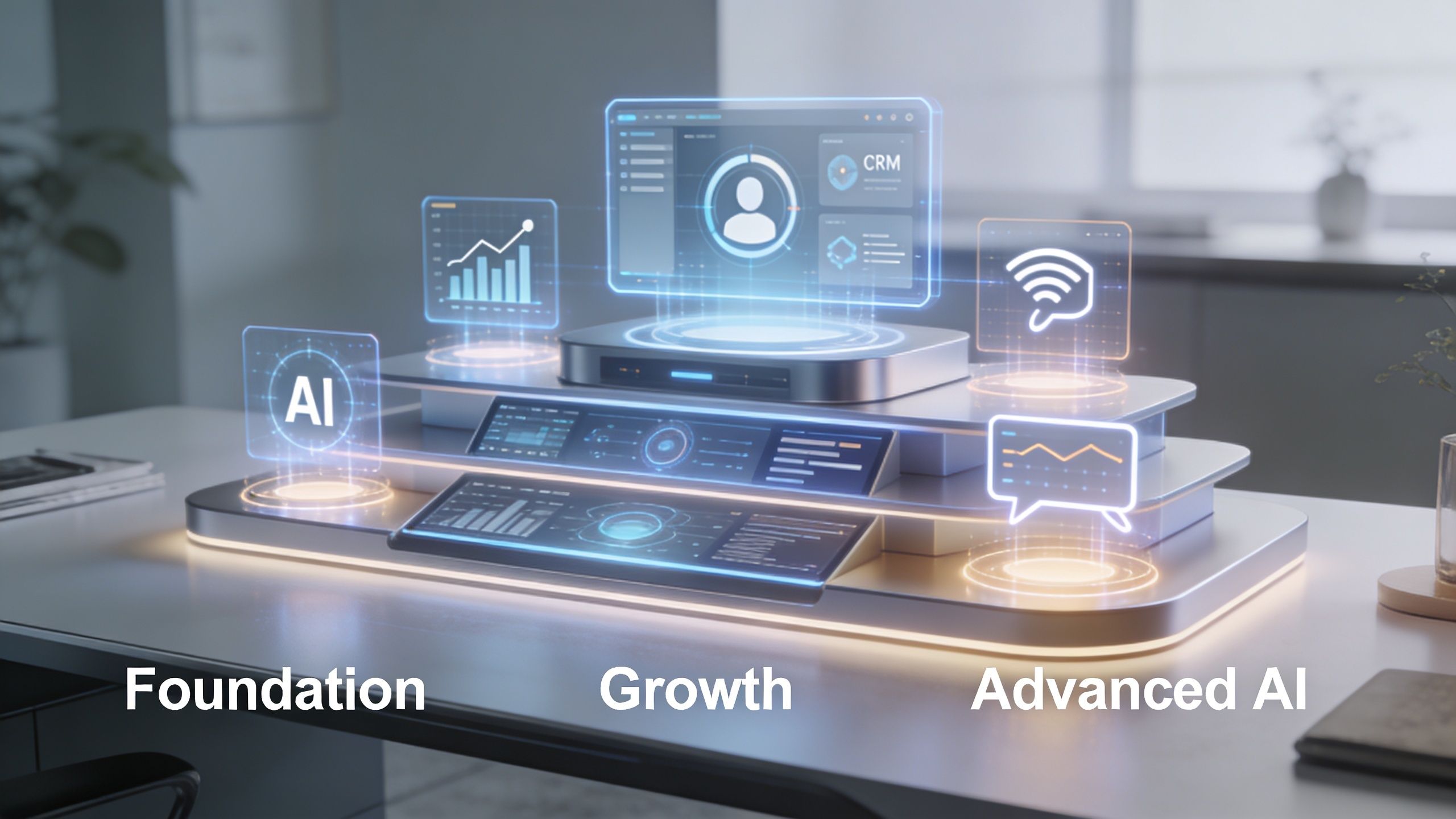
Technology doesn’t replace the call centre quality analyst. It changes where their time goes. Without the right stack, analysts spend too much time finding calls, filling spreadsheets, and compiling reports. With the right stack, they spend more time interpreting patterns, coaching performance, and flagging business issues early.
The biggest shift has come from analytics and automation. AI and speech analytics can review 100% of calls, compared with a 5-10% manual sample, and track measures such as compliance adherence at 99%+ and customer effort. This level of analysis helps teams spot patterns like a 15% rise in Average Handle Time before the issue spreads (TTEC glossary on call center quality assurance).
Level one tools that establish control
Every QA function starts with basic operational visibility.
That usually means:
- Call recording and interaction storage
- A simple scorecard format
- A shared place for coaching notes
- Basic reporting through spreadsheets or dashboards
This setup is enough to create discipline, but not enough to scale well. Analysts can review interactions and document findings, yet trend analysis remains slow and sampling stays narrow.
Level two tools that improve consistency
Once the team grows, QA needs structure.
At this stage, organisations benefit from systems that centralise scorecards, workflow, reviews, and coaching history. The value here isn’t just convenience. It’s consistency. Supervisors can see the same standards, analysts can apply the same logic, and managers can connect evaluations to coaching outcomes more easily.
This is also where many teams start formal calibration sessions. The system supports the process, but the discipline still has to come from leadership.
Level three tools that expand visibility
Analytics change the scale of quality management.
Speech and text analysis can surface repeated phrases, silence, interruption patterns, compliance failures, and friction signals across far more interactions than a human reviewer could cover manually. In teams using real-time agent assistance, this visibility becomes even more useful because insights can influence the conversation while it’s happening, not just after it ends.
A practical way to think about advanced tooling is not “What can the software do?” but “What management decisions can it improve?”
Examples include:
| Technology layer | What it helps the analyst do |
|---|---|
| Recording and transcription | Review interactions accurately |
| QA workflow platform | Standardise scoring and coaching records |
| Speech and text analytics | Detect trends and outliers across large volumes |
| Real-time guidance | Support agents during live interactions |
| Generative AI features | Summarise calls and draft coaching cues |
What generative AI changes
Generative AI is most useful when it removes admin burden and sharpens interpretation.
It can summarise interactions, cluster recurring themes, highlight key moments, and draft first-pass coaching notes. That doesn’t mean analysts should accept outputs blindly. Human review still matters for nuance, fairness, and context. But the technology can reduce the time spent on repetitive work and help analysts focus on higher-value judgment.
For smaller teams deciding what to prioritise first, this overview of best customer service tools is a helpful starting point because it frames tooling choices around business need rather than feature overload.
Technology should narrow the gap between what customers are experiencing and what leaders can see.
What doesn’t justify the investment
Not every tool implementation improves QA.
Poor outcomes usually follow the same pattern:
- Too much automation with weak process discipline
- Dashboards without a coaching plan
- AI outputs trusted without calibration
- Complex systems layered onto unclear scorecards
The stack should make the analyst sharper, not busier. If it adds noise, the operation gets more data and less control.
Hiring and Developing High-Performing QA Analysts
A strong scorecard and a polished dashboard won’t rescue a weak hire. The quality of a QA function depends heavily on the judgment of the people running it. Many organisations cut corners here. They promote a solid agent, give them a checklist, and assume that’s enough.
It usually isn’t.
A major challenge in the field is retention. Industry benchmarks indicate that up to 40% of analysts leave because they don’t see career progression, and stronger organisations respond by creating paths into roles such as QA manager or data specialist (Indeed job market page referenced in the benchmark set). That point matters because a good QA function needs continuity, credibility, and accumulated context.
What to look for when hiring
The best analysts combine technical discipline with human judgment.
Hard skills matter:
- Data literacy: They should read trends without getting lost in surface metrics.
- Operational understanding: They need to know how contact centres function.
- Scorecard discipline: They should evaluate against standards, not mood.
- Written clarity: Reports and coaching notes must be concise and usable.
Soft skills matter just as much:
- Objectivity: They can assess tough calls fairly.
- Empathy: They understand pressure on the front line.
- Coaching instinct: They know how feedback lands.
- Professional backbone: They can challenge poor process design without becoming political.
Questions that reveal the right profile
Interviewing for QA should focus on judgment, not polished theory.
Ask candidates to explain:
- How they’d score a call where the agent followed process but the customer left confused
- What they’d do if supervisors disagreed with their scoring
- How they distinguish a coaching issue from a process issue
- What kind of trend in call reviews would concern them most, and why
The strongest candidates usually answer with examples, trade-offs, and specific reasoning. The weaker ones talk in generic customer service language.
Hire analysts who can explain why a score matters, not just how they gave it.
How to develop them after hiring
Many QA teams train analysts on the form, but not on the craft.
Development should include:
- Calibration practice: Analysts must align with supervisors and each other.
- Shadowing across functions: They need exposure to operations, training, and customer escalation paths.
- Writing discipline: Their findings should become clearer and more actionable over time.
- Business context: They should understand what matters most to the company, whether that’s retention, compliance, speed, or service recovery.
A mature QA culture also teaches analysts when not to overreach. They should influence training and process improvement, but they shouldn’t become unofficial supervisors without accountability lines.
Why career paths matter
The analyst role shouldn’t feel like a static checkpoint job. When it does, strong people leave, weaker scoring habits take root, and the operation starts over again with every replacement.
Practical growth paths can include movement into team leadership, training, workforce support, analytics, or operations improvement. That kind of progression does more than improve retention. It signals that QA is a serious capability, not a back-office side function.
Scaling Your QA Program with a Strategic Outsourcing Partner

Building a mature QA function internally sounds straightforward until actual constraints show up. Hiring takes longer than expected. Scoring isn’t consistent across reviewers. Team leads are too busy managing queues to coach properly. Reporting exists, but it doesn’t drive change.
That’s when outsourcing becomes worth serious consideration. Not as a shortcut, and not as a way to offload responsibility, but as a practical way to add expertise, discipline, and scale faster.
Signs your operation is ready for outsourced QA
A business usually benefits from external QA support when several of these are true:
- Hiring is slow or unreliable: You can’t consistently find strong QA talent when you need it.
- Your current process depends on a few individuals: If one supervisor leaves, the scoring model changes with them.
- Coaching quality varies by manager: Some teams improve while others stagnate.
- You have data but weak diagnosis: Reports show symptoms, not causes.
- Service is growing across channels or locations: Complexity is outpacing internal structure.
- Leadership needs cleaner insight: You want QA to inform decisions, not just document audits.
What outsourcing should actually improve
Outsourcing works best when the partner brings method, not just headcount.
That includes:
| Area | What a strong partner should add |
|---|---|
| Evaluation design | Clear scorecards aligned to business priorities |
| Calibration discipline | Consistent scoring across analysts and leaders |
| Reporting clarity | Trends, root causes, and recommended actions |
| Coaching support | Actionable feedback that supervisors can use |
| Scalability | Coverage that expands as interaction volume changes |
A mature outsourcing model should also integrate with your internal leadership rhythm. QA can’t sit outside the operation as a disconnected reporting service. Findings need to flow into coaching, process review, training, and management decisions.
Why a USA-based outsourcing partner can be an advantage
This matters more than many buyers realise. Quality analysis isn’t only about ticking process boxes. It depends on accurately interpreting nuance.
A USA-based outsourcing partner can offer practical advantages in areas such as:
- Communication clarity: Customer language, idioms, and escalation cues are easier to interpret when the QA function is aligned with the market being served.
- Cultural alignment: Analysts can better assess whether tone, wording, and service style feel appropriate to domestic customers.
- Business-hour overlap: Leaders can review findings, calibrate, and make changes without long lag times.
- Operational accountability: Many organisations value the governance structure and service expectations that come with a US-managed relationship.
Those benefits are especially important when the contact centre supports domestic customers, regulated industries, or high-value service interactions where nuance affects trust.
Outsourced QA works when the partner understands not only what your agents said, but how your customers heard it.
What to test before choosing a partner
Leaders should ask practical questions, not just commercial ones.
For example:
- How does the partner calibrate scoring with client leadership
- Can they adapt scorecards by call type or business line
- How do they separate agent performance issues from process failures
- What does a useful weekly or monthly QA output look like
- How quickly can they ramp coverage without lowering review quality
If the answers stay high-level, the service is likely to stay high-level too.
The real reason companies outsource QA
The strongest reason isn’t cost alone. It’s focus.
An expert partner can stand up the structure, analyst discipline, and reporting cadence needed to turn QA into a management asset. That frees internal leaders to spend more time acting on insights instead of trying to build the entire apparatus themselves. For growing companies, that can mean faster stabilisation. For larger organisations, it can mean more consistent quality across complexity that an overstretched internal team can’t manage alone.
Take Control of Your Customer Experience Today
A high-performing QA program isn’t optional anymore. Every customer conversation either reinforces trust or weakens it. A capable call centre quality analyst helps you see the difference, act on it, and build a service operation that improves instead of repeating the same problems.
The most effective QA functions do three things well. They measure what matters, coach with evidence, and turn recurring friction into process improvement. Whether you build that capability in-house or through a partner, the principle is the same. Listen carefully, evaluate fairly, and use customer interactions as operating intelligence.
If you want stronger visibility into service quality, better coaching discipline, and a more resilient support operation, expert help can shorten the path.
NineArchs LLC helps businesses build stronger service operations through scalable outsourcing and operational support. If you need a reliable, US-managed QA function that brings structure, consistency, and business insight to your customer conversations, contact NineArchs LLC at (310)800-1398 / (949) 861-1804 or email info@ninearchs.com.