
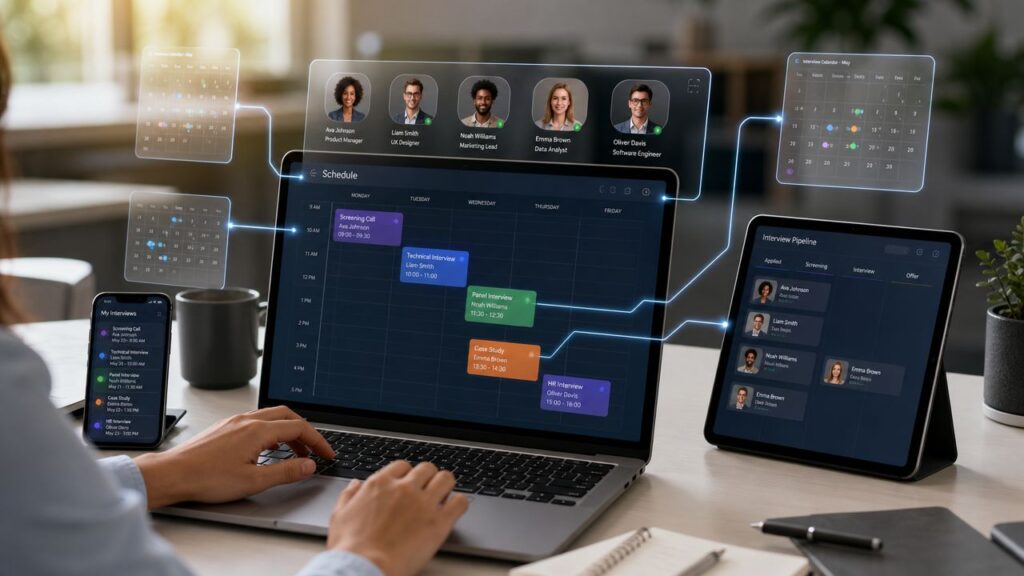
A hiring team can lose momentum in less than a day. A candidate replies quickly, the recruiter is ready to move, the hiring manager is traveling, two interviewers are in different time zones, and the final panel slips into next week because nobody owns the coordination. That delay looks small on a calendar. In practice, it affects candidate confidence, recruiter capacity, and how fast the business can add talent.
That's why interview scheduler jobs deserve a more serious look than they usually get. This role sits inside recruiting operations, but its impact reaches much further. A strong scheduler keeps pipelines moving, protects the candidate experience, reduces friction for interviewers, and gives recruiters more time to spend on sourcing, screening, and closing.
What Is an Interview Scheduler and Why Is the Role Critical
An interview scheduler is the person who owns the mechanics of interview coordination so the hiring process doesn't stall. In older org charts, this was treated like calendar support. In modern recruiting teams, it's an operations role with direct influence on hiring speed.
The difference matters because manual scheduling still consumes a surprising amount of time. In a 2026 recruiting coordination analysis, coordinators spent 46% of their time on admin-related scheduling tasks. The same analysis found that manual coordinators handled about 30 interviews per week, while AI-enabled coordinators handled about 158 interviews per week, a roughly 5x capacity difference.
The role is operational, not just administrative
A scheduler isn't just booking meetings. They're aligning candidates, recruiters, hiring managers, panelists, calendars, availability rules, reminders, and system updates. When that work is done well, the hiring team feels organized. When it's done poorly, everyone feels it.
Three business outcomes are tied to this role:
- Hiring velocity: Interviews get booked faster, reschedules get resolved sooner, and open roles move through the funnel without idle gaps.
- Candidate experience: Candidates get clear communication, fewer confusing handoffs, and less dead air between stages.
- Recruiter productivity: Recruiters stop spending large parts of the day chasing calendars and can focus on higher-value work.
Practical rule: If recruiters are acting as part-time schedulers, your process is already leaking capacity.
Why the role has become more important
Distributed hiring changed the job. A scheduler now has to handle time-zone complexity, panel logistics, video links, interviewer availability, and candidate expectations around speed. The role also has to protect interviewer time. Booking the first open slot isn't enough if it creates panel fatigue, stacked calendars, or rushed transitions.
The strongest interview scheduler jobs usually sit close to recruiting operations because that's where process discipline lives. These professionals often spot patterns before anyone else does. They see where interview loops break, where interviewers decline too often, where candidates wait too long, and where the ATS data no longer matches reality.
That's why this role should be treated as a strategic asset. The scheduler is often the control point between hiring demand and execution capacity. If you want a faster, more reliable hiring process, this is one of the first roles worth strengthening.
The Core Responsibilities of an Interview Scheduler
The daily work in interview scheduler jobs is more layered than most job descriptions admit. On paper, it looks like calendar management. In reality, it's exception handling, workflow control, candidate communication, and system hygiene happening at the same time.

What the day actually looks like
A scheduler may start the morning by confirming interviewer availability for a final-round panel, then switch to rescheduling a candidate whose availability changed overnight. After that, they might clean up outdated interview stages in the ATS, send reminder emails for the afternoon's interviews, and troubleshoot a missing meeting link for a hiring manager who joins late.
That mix of work requires constant reprioritization. The schedule that looked stable at 9 a.m. can unravel by noon when an interviewer declines, a candidate asks for an accommodation, or a panel can only meet inside a narrow shared window.
For distributed hiring, the scheduler also has to manage the hidden constraints that create scheduling failures. According to guidance on interview scheduling for distributed teams, effective schedulers don't just take the earliest open slot. They manage buffers between interviews and pre-block shared windows for panels, which reduces collisions and makes interviewer time more predictable.
Core responsibilities that define the role
Most solid interview scheduler jobs include responsibilities like these:
- Owning interview logistics: Coordinate single interviews, multi-stage loops, and panel sessions across candidate and interviewer calendars.
- Managing communication flow: Send confirmations, reminders, updates, and reschedule notices without leaving the candidate unsure about what happens next.
- Protecting schedule quality: Build in buffer time so interviewers aren't running back-to-back without prep or debrief space.
- Maintaining ATS accuracy: Update interview stages, statuses, notes, and scheduling records so the recruiting team works from clean data.
- Handling exceptions fast: Solve no-shows, late declines, interviewer conflicts, and same-day changes with minimal disruption.
- Supporting the interview team: Share interview details, packet materials, and logistics so hiring managers aren't piecing information together themselves.
A good scheduler prevents confusion before anyone notices there was a risk of confusion.
What doesn't work
Schedulers struggle when the company gives them responsibility without authority. If interviewers ignore holds, hiring managers don't share availability, or recruiters bypass the process, the scheduler becomes a firefighter instead of an operator.
Weak scheduling setups usually have a few patterns in common:
| Situation | What happens |
|---|---|
| No shared process | Every recruiter schedules differently, which creates inconsistency |
| No buffer rules | Interviews stack too tightly and delays ripple through the day |
| Poor calendar discipline | Holds get ignored, double-bookings increase, reschedules spike |
| Unclear ownership | Candidates receive fragmented updates from multiple people |
The best schedulers create order by standardizing how booking, reminders, handoffs, and reschedules happen. That consistency is what keeps hiring from becoming a chain of small preventable failures.
Essential Skills and Tools for Success
The best people in interview scheduler jobs combine process control with strong people judgment. That mix matters because hiring isn't only a calendar problem. It's a coordination problem under deadline pressure.
The technical side
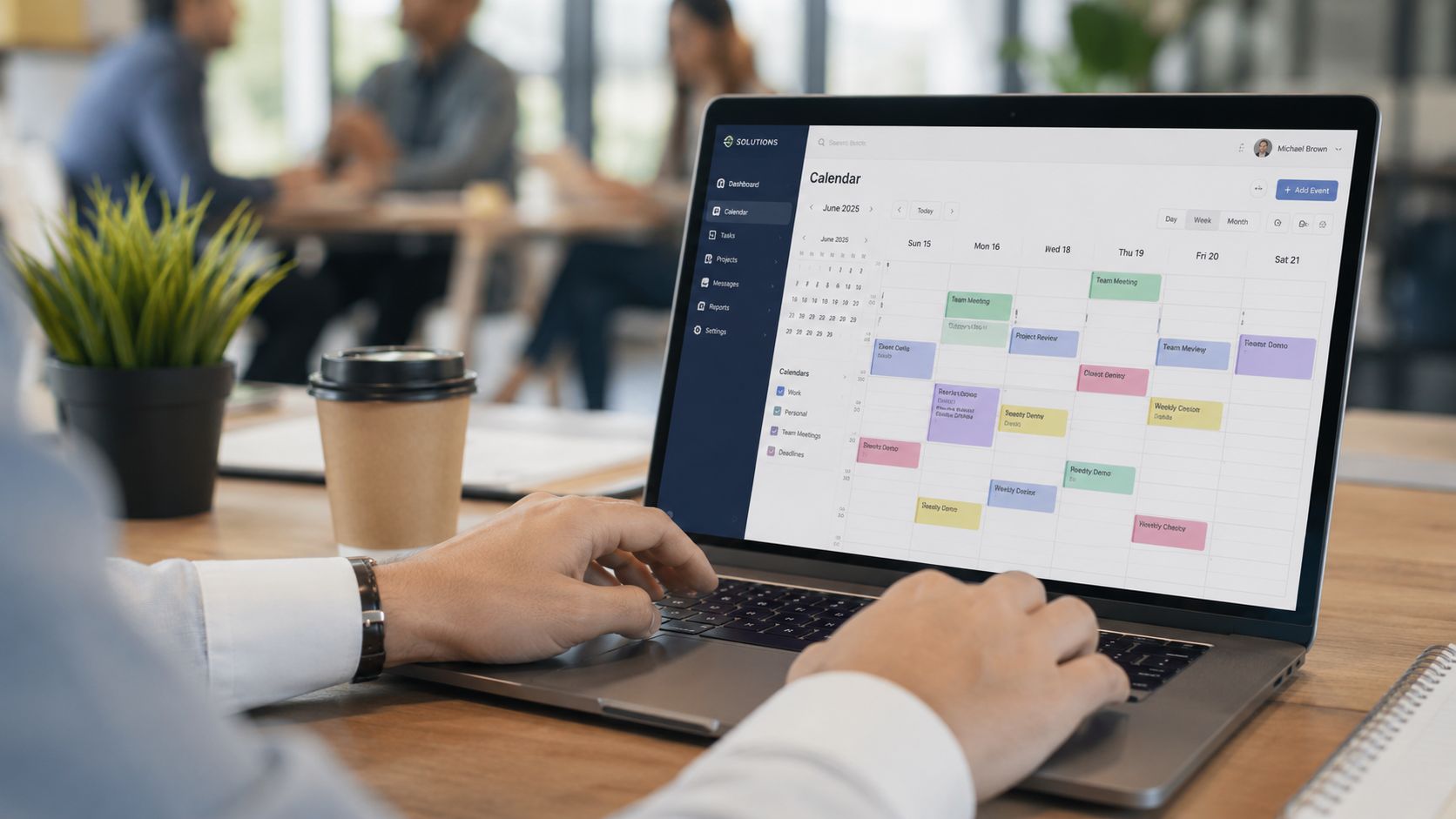
Schedulers need systems fluency. They should be comfortable working inside an ATS, managing calendar permissions, using templates, generating meeting links, and keeping records current across systems. They also need enough confidence with office software and databases to track status changes and spot inconsistencies.
Modern scheduling workflows work best when the system handles repetitive coordination. This overview of interview scheduling systems notes that the most effective setups automate calendar coordination, time-zone handling, reminders, and ATS or video-platform integration. Those functions remove the back-and-forth that slows down hiring.
A hiring manager should look for candidates who can operate in a workflow like this:
- Calendar sync: They understand how availability should flow and where conflicts usually appear.
- Time-zone handling: They don't make candidates do the mental math.
- Reminder logic: They know timely reminders reduce confusion and missed interviews.
- System integration awareness: They understand why records need to stay aligned across recruiting and meeting systems.
The human side
Technical comfort isn't enough. A scheduler also has to communicate with anxious candidates, busy executives, and interviewers who often reply late or incompletely. That takes tact, clarity, and urgency.
The strongest schedulers usually stand out in five ways:
- They write clearly. Their emails answer practical questions before candidates ask them.
- They stay calm under change. A same-day panel issue doesn't throw them off.
- They manage details without losing the big picture. They can fix one conflict while protecting the full interview sequence.
- They follow through. They don't assume someone else updated the record.
- They read people well. They know when to push, when to escalate, and when to reassure.
Working standard: If a candidate has to ask, “What happens next?” the scheduling process probably wasn't clear enough.
What job seekers should learn next
If you're trying to move into interview scheduler jobs, study recruiting workflow rather than just calendar software. You'll be more valuable if you understand how sourcing, screening, interview stages, and offer steps connect.
For people building broader recruiting coordination skills, understanding LinkedIn Recruiter Lite can help clarify how outreach, pipeline management, and scheduling fit together in smaller hiring environments. Even when the scheduler role is specialized, the career upside usually comes from understanding the full recruiting motion, not only the booking piece.
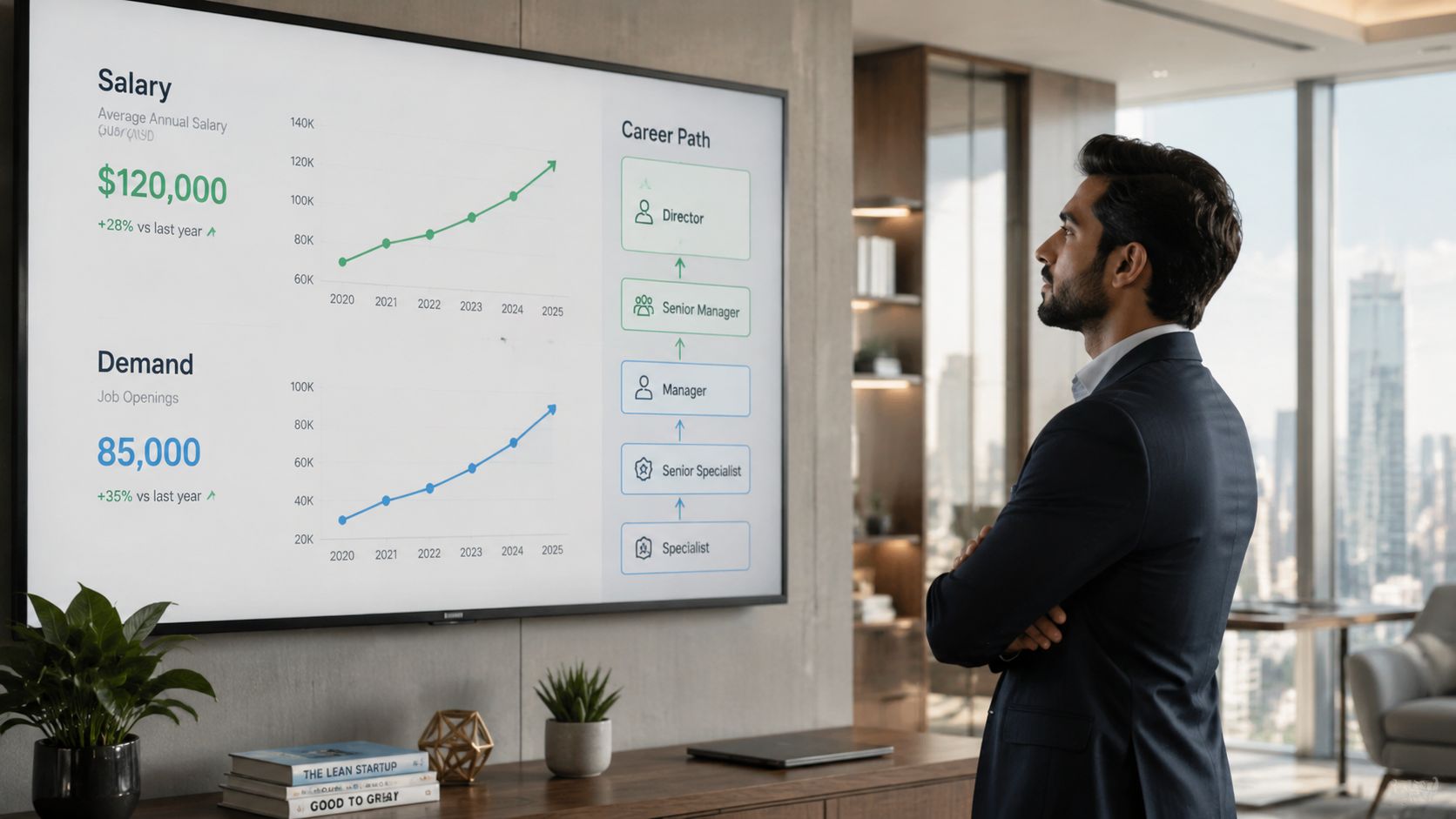
Interview Scheduler Salary and Market Demand in 2026
The first thing to know about interview scheduler jobs is that the title isn't standardized. That's why salary conversations often go sideways. Two postings can use similar language while describing very different work.
Why market comparisons are messy
Job seekers often expect one clean market rate for this title, but employers use it inconsistently. Some roles are closer to recruiting coordinator positions. Others sit inside healthcare scheduling, outreach logistics, or education administration. Current job listings under the term show that “interview scheduler” is not a single job family, and that makes direct comparisons difficult.
That inconsistency affects more than compensation. It changes required skills, work hours, reporting lines, and long-term career paths. A role attached to talent acquisition can lead into recruiting operations or HR operations. A role in another field may have a very different progression path.
How to read the market realistically
Instead of focusing only on title, evaluate the job through these filters:
| What to review | Why it matters |
|---|---|
| Department | Recruiting, healthcare, education, and outreach roles can share the title but not the function |
| Scope | Single-stage booking work differs from owning multi-stage interview operations |
| Systems | ATS and recruiting workflow exposure usually indicate stronger TA career relevance |
| Stakeholders | Supporting recruiters and hiring managers is different from general appointment scheduling |
A stronger listing usually mentions cross-functional coordination, ATS hygiene, candidate communication, and reporting responsibility. A narrower listing tends to focus only on booking and confirming appointments.
What employers and candidates should watch for
If you're hiring, title choice influences applicant quality. Calling the role “interview scheduler” may attract people with strong scheduling backgrounds but limited recruiting operations experience. If the work includes reporting, candidate communications, and process ownership, a broader title may set better expectations.
If you're applying, don't assume every interview scheduler job leads to the same next step. Read for signals such as exposure to recruiters, hiring managers, process improvement, and workflow ownership. Those are the details that usually determine whether the role becomes a dead end or a launch point.
For many candidates, this is also where skills-based evaluation matters more than title matching. Employers that hire for operational strengths, communication, and system discipline often make better selections than those that screen too narrowly on prior titles alone. A useful framework is this guide on skills-based hiring, especially when the job itself blends administrative execution with recruiting support.
Sample Job Description and Key Interview Questions
A vague posting attracts vague candidates. If you want someone who can run interview logistics under pressure, the job description has to reflect the actual work.
Sample job description
Job title: Interview Scheduler
Role summary
The interview scheduler coordinates candidate interviews across multiple stages and stakeholders. This role manages calendar alignment, candidate communication, interviewer coordination, scheduling changes, and ATS updates to keep the hiring process moving smoothly.
Key responsibilities
- Coordinate interviews: Schedule phone screens, video interviews, panels, and final rounds across candidate and interviewer calendars.
- Communicate clearly: Send confirmations, reminders, prep details, and reschedule notices to candidates and internal teams.
- Maintain system accuracy: Update interview stages, statuses, scheduling notes, and related records in the ATS.
- Resolve conflicts: Handle cancellations, interviewer declines, and last-minute changes with speed and professionalism.
- Support process consistency: Follow scheduling standards, buffer rules, and escalation paths.
- Partner with recruiting teams: Work with recruiters, hiring managers, and coordinators to keep the interview pipeline current.
Preferred qualifications
- Experience in scheduling, recruiting coordination, operations support, or administrative workflow management
- Strong written communication and organizational skills
- Comfort working across calendars, spreadsheets, databases, and recruiting systems
- Ability to manage urgent changes without losing attention to detail
- Professional judgment with candidates and senior internal stakeholders
Interview questions that actually reveal fit
Most hiring managers ask generic questions and get polished generic answers. Better questions force candidates to explain how they work.
Try these:
Tell me about a time an interviewer canceled close to the interview start time. What did you do first?
This shows prioritization and communication instincts.How do you keep candidates informed when several people are involved in the process?
Listen for structure, not just friendliness.Describe a scheduling workflow you improved. What changed after you took it over?
You want evidence of process thinking.How do you manage panel interviews when calendars are tight?
Strong candidates will talk about shared windows, buffer protection, and fallback options.What steps do you take to keep the ATS accurate while handling a high volume of changes?
This tests discipline under pressure.
Ask for examples with real constraints. Good schedulers usually remember the messy situations because that's where the job is won or lost.
Where job seekers can study real listings
If you want to compare how remote employers describe scheduling-heavy roles, it helps to explore remote jobs on YayRemote. Even when the industry differs, you can learn a lot from how employers describe communication standards, systems requirements, and coordination expectations.
Hiring In-House vs Outsourcing Your Interview Scheduling
A recruiting team can run strong sourcing, sharp interviews, and fast approvals, then still lose candidates because no one owns the calendar. That is usually the point where leaders realize scheduling is an operations decision, not a clerical task.

When in-house makes sense
An internal hire fits best when hiring volume is steady, interview stages are well defined, and someone on the talent team can manage the role closely. In that setup, the scheduler picks up company habits quickly. They learn which interviewers need extra lead time, which hiring managers respond fastest, and where approvals tend to stall.
The trade-off is fixed cost and fixed management work.
You still need coverage for PTO, sick days, and recruiting spikes. You also need documentation, service standards, and quality control. Smaller teams often underestimate this part. They hire one scheduler, then realize the role only works well when the process around it is already stable.
When outsourcing makes more sense
Outsourcing is usually the better choice when hiring demand moves up and down, recruiters are spending too much time on calendar logistics, or the company needs support faster than it can hire and train internally. It also gives hiring teams a way to add scheduling capacity without committing to another full-time seat before the workload is predictable.
There is a practical business case for that choice. In an early experimental evaluation of an online interview scheduler, researchers found shorter fieldwork time and lower cost per completed interview among people who scheduled their own appointments. The context is different from corporate recruiting, but the operating lesson still applies. Better scheduling systems reduce delay and waste.
A practical comparison
| Option | Best fit | Main trade-off |
|---|---|---|
| In-house scheduler | Stable hiring environment with predictable process volume | More fixed overhead and less flexibility |
| Outsourced scheduling support | Variable demand, rapid growth, lean recruiting team | Requires clear process design and service ownership |
Why a US-based outsourcing partner can be a better operational fit
For candidate-facing scheduling, response timing and communication quality matter. A US-based outsourcing partner often aligns more closely with the business hours, tone, and service expectations your candidates and hiring managers already work with. That reduces missed handoffs and avoidable back-and-forth.
Outsourcing also works best when companies treat it as an operating model with defined ownership. The partner handles execution, but your team still needs response-time targets, escalation rules, interviewer availability standards, and ATS update requirements. Teams evaluating that model can start with this explanation of how business process outsourcing works in practice.
NineArchs LLC is one example of a provider that offers outsourcing and virtual assistant support relevant to interview scheduling workflows, including calendar and email coordination. For companies with uneven hiring volume, that setup can give recruiting teams dependable coverage without adding immediate headcount.
Outsourcing fails when the company hands off a broken process. It works when the company sets clear ownership, service levels, and escalation paths from the start.
That is the key comparison. In-house gives you tighter day-to-day control. Outsourcing gives you speed, flexibility, and coverage. The right choice depends less on philosophy and more on hiring volume, manager discipline, and how much operational structure your team already has.
Elevating Your Hiring with Strategic Scheduling
Interview scheduler jobs sit much closer to revenue and growth than most companies admit. The role affects how quickly candidates move, how professional the process feels, and how much recruiter capacity gets consumed by logistics instead of hiring work.
Companies that treat scheduling as a strategic function usually run tighter hiring operations. Companies that treat it as ad hoc admin usually feel the cost in delays, candidate drop-off, and recruiter overload. Whether you build the role internally or pair with outside support, the right move is to give scheduling real ownership inside your talent process and connect it to broader talent management consulting priorities.
If your team needs reliable interview scheduling support, NineArchs LLC can help you build a more responsive hiring operation through outsourcing and operational support. For a practical conversation about your current process and coverage needs, call (310)800-1398 / (949) 861-1804 or email info@ninearchs.com.