
Quarter-end reviews often surface the same uncomfortable pattern. Revenue may be steady, customer demand may be rising, and digital initiatives may be moving forward, yet the cost of keeping core systems running keeps climbing in the background.
For many leaders, the problem doesn't show up as a dramatic outage first. It shows up as utility bills that feel harder to explain, cooling systems that never seem to get a break, aging server rooms that are running hot, and growing pressure from customers, boards, and regulators to prove the business is operating responsibly.
That's where the green it data center conversation becomes useful. Not as a branding exercise. Not as a sustainability slogan. As a business decision about efficiency, resilience, and control.
The Hidden Costs of Inefficient IT
A common scenario plays out like this. The operations team asks for more compute capacity because analytics workloads have grown. Finance sees higher power and facilities costs. Compliance asks tougher questions about reporting and environmental commitments. Everyone is looking at the same problem from a different angle, but the root issue is often the same: the infrastructure was built for yesterday's workload, not today's operating reality.
The hidden cost isn't only the electricity bill. It's the chain reaction that follows from inefficient infrastructure. When cooling is poorly designed, equipment runs under more stress. When hardware is underutilized, companies pay to power and maintain capacity they don't really need. When an old server room has no meaningful visibility into energy use, leadership is forced to manage by guesswork.
Where the real expense shows up
These costs usually land in places executives feel quickly:
- Operating overhead: Power, cooling, maintenance, and emergency fixes keep rising.
- Business risk: Heat, density, and aging infrastructure raise the odds of service disruption.
- Compliance pressure: Sustainability expectations are moving from optional reporting to board-level oversight.
- Growth friction: New digital services get delayed because the current environment can't scale cleanly.
Inefficient IT behaves like an old building with bad insulation. You keep paying more to maintain the same comfort level, but the system never feels stable.
The environmental issue is also now a business issue. The digital sector contributes 1.5-4% of global carbon emissions, and data centers demand significant water and land resources, which is one reason organizations are rethinking infrastructure design and operations, as outlined in the World Bank's sustainable digital transformation overview.
Why executives are reframing the problem
A green it data center matters because it changes the conversation from “How do we support more systems?” to “How do we support growth with less waste?”
That distinction matters. One approach adds cost as the company expands. The other tries to improve the economics of expansion itself.
For an executive team, that's a significant opportunity. A greener data center strategy can lower overhead, reduce operational volatility, and support future reporting obligations without forcing the business to choose between growth and discipline.
What Is a Green IT Data Center
A legacy data center is a lot like a classic muscle car. It can be powerful. It can still get the job done. But it burns more fuel than it should, creates excess heat, and relies on brute force where smarter engineering would do better.
A green it data center is closer to a modern high-efficiency vehicle. It still delivers performance, but every system is designed to reduce waste. Power delivery is tighter. Cooling is more targeted. Monitoring is more intelligent. Capacity is managed with intent instead of habit.
It's a business model, not just a facility design
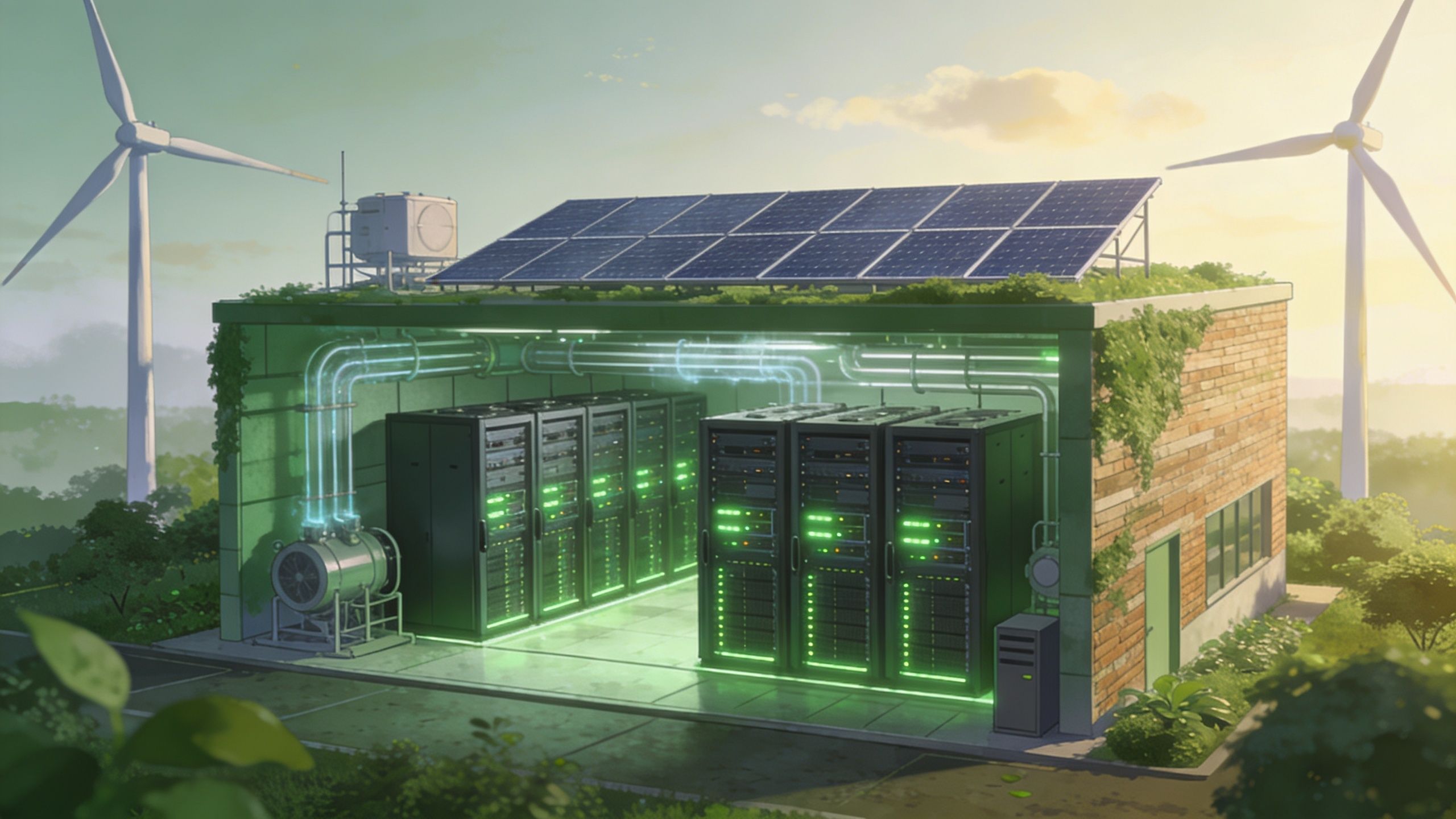
Many executives hear “green” and assume the discussion is mostly about renewable energy. That's only part of it. In practice, a green IT data center is a coordinated operating model built around four ideas:
- Use less energy to deliver the same or better computing output
- Reduce waste across cooling, power distribution, and hardware footprint
- Improve visibility so teams can manage costs and performance in real time
- Prepare the business for stricter reporting, resilience demands, and customer scrutiny
That broad view matters because the digital footprint is no longer trivial. The World Bank notes that the digital sector contributes 1.5-4% of global carbon emissions, and that pressure is intensifying as IT and telecom continue to grow and organizations face efficiency mandates and carbon targets in the World Bank publication on green data centers.
What it usually includes
A green it data center can include on-premises modernization, colocation in efficient facilities, or migration into greener cloud environments. The exact path differs by company, but the underlying design principles are consistent.
A practical model usually includes:
- Efficient cooling: Airflow management, containment, and more advanced cooling methods where density requires it
- Consolidated compute: Fewer physical machines doing more useful work
- Smarter monitoring: Systems that track power, heat, and utilization instead of leaving those issues hidden
- Cleaner power sourcing: On-site generation, renewable purchasing strategies, or provider selection based on sustainability performance
For facilities leaders who want the building-side perspective, the 2026 USGBC guide is a useful companion resource because it connects sustainability goals to physical infrastructure decisions.
A green data center isn't “less powerful.” It's less wasteful.
That's the distinction executives should keep in focus. The goal isn't to make IT smaller for its own sake. The goal is to make every watt, square foot, and hardware investment work harder.
Key Metrics That Measure Success
Executives don't need to master every engineering detail, but they do need a short list of numbers that tell them whether a data center is efficient or expensive in disguise. The most important of these is PUE, with WUE and CUE providing a broader sustainability view.
PUE in plain English
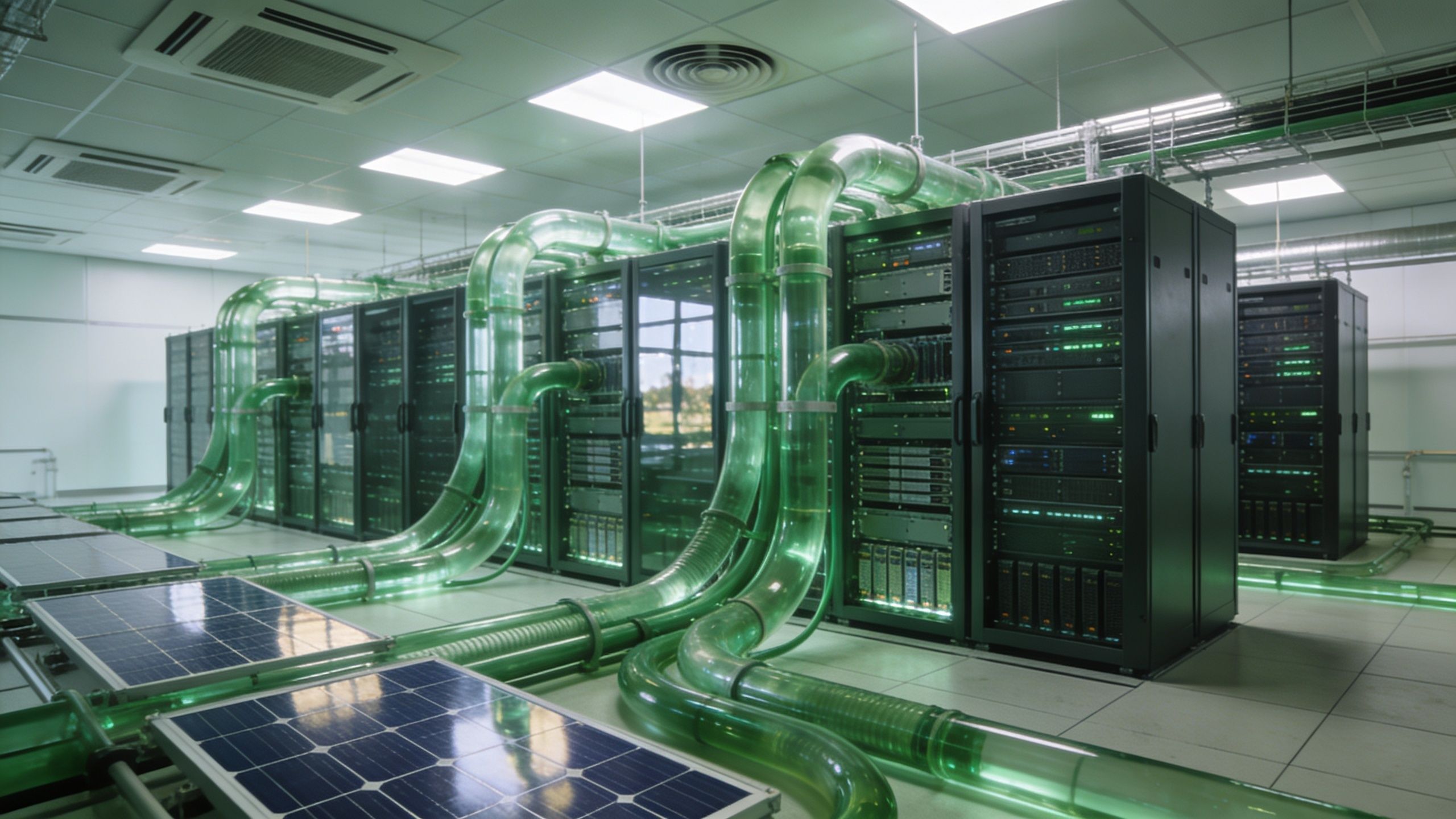
Power Usage Effectiveness or PUE is calculated as total facility energy divided by IT equipment energy.
That definition comes from the IBM overview of green data center operations, and it matters because it turns a technical concept into a financial one. PUE tells you how much energy goes to actual computing versus how much gets spent on the overhead required to support it.
If the number is high, the facility is burning too much energy on cooling, power conversion, lighting, and supporting infrastructure. If the number moves closer to 1.0, more of the energy spend is going where the business gets value.
IBM notes that leading green data centers target PUE below 1.3, while the global average was about 1.58. The same source also notes that a 0.1 PUE reduction can yield about 10% annual savings for a 1MW facility. That makes PUE one of the clearest boardroom metrics in the whole green IT discussion.
What executives should track
A simple scorecard helps keep the conversation practical:
| Metric | What it tells you | Why leadership should care |
|---|---|---|
| PUE | Energy spent on overhead versus computing | Direct impact on operating cost |
| WUE | Water used to support the facility | Important in water-constrained regions and ESG reviews |
| CUE | Carbon tied to data center energy use | Important for reporting, procurement, and emissions strategy |
The three metrics work together. A facility can improve one area while creating pressure in another, so decisions should be balanced rather than made in isolation.
How to use metrics without getting lost in them
Most organizations don't fail because they lack dashboards. They fail because they collect numbers they don't act on.
A better approach is to connect each metric to a management question:
- PUE: Are we paying too much for non-computing overhead?
- WUE: Are our cooling choices creating future risk?
- CUE: Are our energy decisions aligned with reporting expectations and customer commitments?
For teams trying to connect infrastructure efficiency with broader spend management, these cloud cost optimization strategies are a useful operational complement.
The best metric is the one that changes a decision. If a number never affects budgeting, design, or procurement, it's reporting theater.
Core Technologies and Design Strategies
Most data centers don't become efficient because of a single upgrade. They improve when several design choices start reinforcing each other. Cooling, consolidation, monitoring, and energy sourcing work best as a system.
Cooling that targets the problem
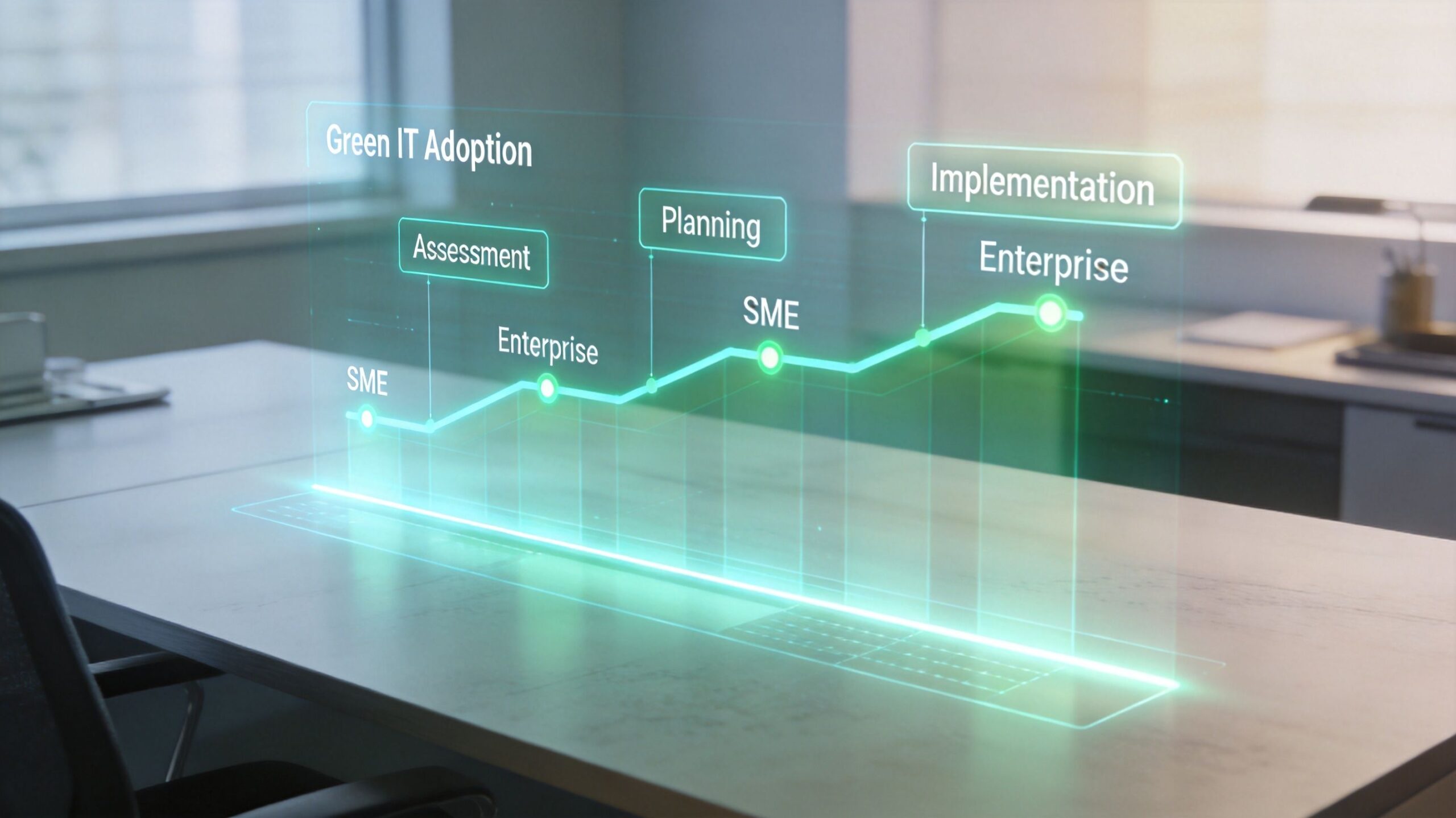
In many older environments, cooling is treated like a blunt instrument. The room gets cold, but the hot spots remain. That approach wastes energy because it cools too much space instead of cooling the equipment that requires it.
More effective facilities redesign airflow and containment first. They isolate hot and cold paths, reduce recirculation, and keep cooling focused where load density is highest. In environments with heavier compute demand, more advanced cooling can make sense because it removes heat closer to the source.
What works is disciplined airflow, containment, and cooling tied to actual load. What doesn't work is overcooling an entire room to compensate for a layout problem.
Consolidation changes the economics
Virtualization and consolidation often deliver the fastest operational wins because they attack waste directly. Think of it as moving from a neighborhood of half-empty houses into a well-designed high-rise. You still have the same people inside, but you need less land, less wiring, and less energy to support them.
That shift matters because many businesses still run more physical infrastructure than their workloads justify. Consolidating compute reduces hardware count, shrinks the support burden, and lowers the amount of cooling required.
A thoughtful consolidation plan usually improves more than energy efficiency. It can also simplify patching, backup, recovery planning, and governance.
For leaders who want a strong operational lens on consolidation strategy, this expert guide on data center optimization is worth reviewing.
The control layer matters more than people expect
Efficient infrastructure needs a brain, not just better hardware. That control layer comes from monitoring and management systems that track power draw, thermal patterns, capacity, and equipment behavior in real time.
Without that visibility, teams react after the fact. With it, they can spot persistent hot zones, identify underused equipment, and align power and cooling decisions with live demand.
This is also where governance enters the picture. Efficient technology without operating discipline tends to drift back into waste. Teams making infrastructure changes should align technical decisions with policy, accountability, and oversight, especially in hybrid environments. A useful reference point is this practical take on governance in the cloud.
Renewable integration is useful, but not a shortcut
Cleaner energy sourcing matters, but it shouldn't be used to mask inefficiency. Buying greener power while leaving the facility poorly designed is like installing better windows in a building with the doors propped open.
A stronger sequence is:
- First: Reduce waste in compute, cooling, and facility operations
- Then: Improve monitoring and operational discipline
- Finally: Layer in renewable sourcing or cleaner procurement models
Efficient design lowers the amount of energy you need. Cleaner sourcing lowers the impact of the energy you still use. Strong green IT strategy requires both.
The point isn't to chase every possible technology. It's to combine a few proven design choices into an operating model that lowers cost and supports growth.
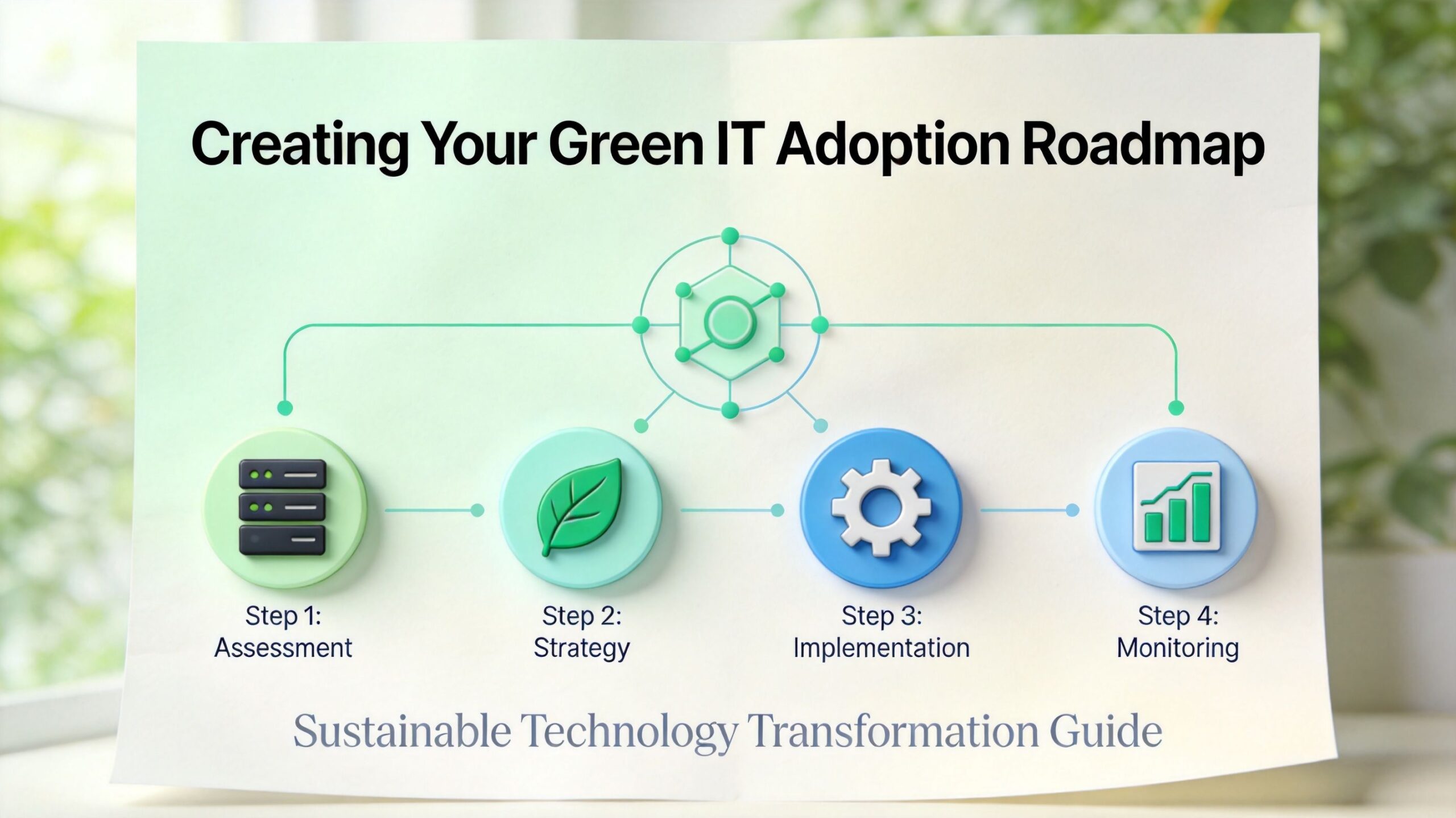
Creating Your Green IT Adoption Roadmap
Most organizations shouldn't start with a major rebuild. They should start with a clear diagnosis. That's true for an SME with a cramped server room and for an enterprise managing a mixed estate of on-premises systems, colocation footprints, and cloud workloads.
The smartest path is phased. Not because caution is fashionable, but because sequencing reduces waste and prevents expensive mistakes.
Start with the current-state audit
A green it data center roadmap begins with honest measurement. Leadership needs to know what infrastructure exists, how heavily it's used, where the energy burden sits, which systems are business-critical, and which constraints are self-inflicted.
That review should cover:
- Physical assets: Servers, storage, networking gear, cooling systems, and room design
- Utilization patterns: Which systems are overbuilt, idle, or duplicative
- Business dependencies: Which applications can move, which need redesign, and which must remain local
- Risk exposure: Heat, resiliency gaps, aging equipment, and unsupported configurations
A roadmap built without this audit usually turns into a shopping list, not a strategy.
Separate quick wins from structural moves
Not every improvement requires capital-heavy change. Some actions reduce waste quickly, while others belong in a longer modernization program.
A practical way to think about it is this:
| Stage | Typical focus | Business value |
|---|---|---|
| Immediate | Consolidation, airflow fixes, policy cleanup, workload review | Lower waste and improve visibility |
| Mid-term | Facility upgrades, migration planning, redesign of priority workloads | Improve efficiency and resilience |
| Long-term | New hosting model, cleaner energy sourcing, broader modernization | Future-proof operations and reporting |
Companies often face the build-versus-buy decision at this stage. For many SMEs, building a highly efficient environment in-house isn't the best financial move. The more practical route is often migration into a greener cloud or efficient hosted environment. According to the ABI Research discussion of green data center economics, SMEs can see break-even on investments in efficient cooling and on-site renewables in 24-36 months, and outsourcing to a green cloud provider can help them adopt these benefits without taking on the full upfront capital burden.
Why a US-based outsourcing partner helps
A transition like this crosses technology, finance, facilities, and compliance. That's one reason many companies stall. Nobody owns the full problem internally.
A US-based outsourcing partner can reduce that friction in practical ways:
- Compliance alignment: US-based teams are often better positioned to coordinate documentation, reporting expectations, and audit readiness across stakeholders
- Vendor and facility evaluation: They can help compare hosting, migration, and modernization paths without forcing internal teams to learn everything from scratch
- Program management: They keep infrastructure, application, and operational workstreams moving together
- Risk reduction: They reduce the chance that an efficiency project causes business disruption
For organizations weighing the broader modernization side of the decision, this guide on evaluating software modernization risk control is a helpful planning reference.
A green IT roadmap also overlaps with relocation and migration planning. These data center migration considerations help frame the operational side of moving from a legacy environment into a more efficient one.
Practical rule: Don't treat green IT as a facilities project with some IT tasks attached. Treat it as a business transformation with infrastructure at the center.
That shift in mindset is what keeps the roadmap realistic.
Real-World Success Stories
At the high end of the market, large operators have shown what disciplined efficiency can achieve. Their scale lets them invest in custom cooling design, tighter energy management, and long-term power strategy. Those examples matter because they prove the model works. They don't matter because smaller companies should copy them line for line.
What mid-market organizations should copy is the logic.
One practical scenario looks like this. A growing company has an on-premises server room that expanded in stages over the years. Different systems were added whenever a new department needed capacity. Cooling was adjusted reactively. Nobody made a deliberate design decision about efficiency because uptime always felt more urgent than optimization.
The result is familiar. The room is hard to manage, energy overhead keeps rising, and every hardware refresh feels like another patch on a system that no longer fits the business.
A realistic improvement path would be to virtualize the most predictable workloads, retire equipment that no longer serves a clear purpose, and move selected applications into a more efficient hosted environment. The remaining local systems would stay only if they have a genuine business reason to remain on-site.
What changes after the shift
The gains are usually more operational than dramatic:
- Less infrastructure to cool and maintain
- Cleaner disaster recovery planning
- Better visibility into capacity and cost
- Fewer surprise failures from overloaded rooms or aging gear
An enterprise version of the same story looks different in scale but similar in principle. The company may keep some regulated or latency-sensitive workloads in controlled environments while moving more standard services into greener facilities and modernized cloud architectures. The target isn't perfect uniformity. It's disciplined placement.
Companies get the best results when they stop asking, “How do we keep every workload where it is?” and start asking, “What's the right environment for each workload now?”
That's the practical lesson from real green IT progress. The organizations that move forward don't wait for a total reset. They make targeted decisions that improve economics, reliability, and resilience one layer at a time.
Your Next Step Toward an Efficient Future
The case for a green it data center is now straightforward. It helps control operating costs. It strengthens resilience. It supports compliance and reporting pressure. It gives the business a better platform for growth.
That's why this isn't a niche infrastructure topic anymore. It's a strategic operating decision. The market is moving in the same direction. Grand View Research projects the global green data center market will grow from USD 70.45 billion in 2024 to USD 200.46 billion by 2030, representing a 19.0% CAGR, according to its green data center market outlook. That projection matters because it reflects a broad shift in how organizations are approaching digital infrastructure.
For SMEs, the practical question is usually how to modernize without overcommitting capital or internal bandwidth. For enterprises, it's often how to improve efficiency and resilience across a more complex footprint. In both cases, the right answer is usually phased, measured, and tied to business priorities rather than technical fashion.
The strongest move you can make now is to assess your current environment thoroughly. Find the waste. Clarify which workloads belong where. Build a roadmap that improves efficiency without adding unnecessary risk.
A smart transition doesn't require perfection on day one. It requires a plan that the business can execute.
If you're ready to discuss a practical green IT strategy, talk with NineArchs LLC. A US-based outsourcing partner can help de-risk planning, modernization, migration, and ongoing operations without forcing your internal team to carry the full burden alone. Call (310)800-1398 or (949) 861-1804, or email info@ninearchs.com.