
Teen leadership is still too often sold as a stage skill problem, as if the goal were better eye contact, louder voices, or a shiny title. That framing misses what changes behavior. Adolescents are not asking how to perform leadership, they're asking who they're becoming, where they belong, and whether anyone will trust them with real responsibility.
That's why leadership development for teens works best when it treats leadership as identity-building, self-regulation, and relational responsibility. The field itself supports that shift. A 2023 PubMed review describes adolescence as a critical period for leadership emergence and development while also noting that youth leadership remains understudied, and a 2021 systematic review identified 38 studies on adolescent and emerging-adult leadership talent development, which shows the topic is established but still relatively small in the research base (PubMed review). In practice, that means the strongest programs don't just teach teens to speak up. They help them see themselves as people who can notice a problem, steady themselves, and act.
Why Most Teen Leadership Programs Miss the Real Target
The most common mistake is treating leadership like a performance package. Programs often lean on icebreakers, polished presentations, and group challenges that look lively on a brochure, but they don't always touch the internal question that determines follow-through: Do I believe leadership is something I can grow into? If the answer is no, teens will borrow the language of leadership without changing how they behave when things get tense.
Leadership is learned, not inherited
A 2024 study on adolescent leader emergence found that parental warmth was positively correlated with leader emergence in a sample of 1,255 adolescents with a mean age of 14.2 years, and a second sample of 32 adolescents with a mean age of 15.16 years reinforced the role of companionship, communication, and encouragement of independence (ERIC study). That matters because it shows leadership is shaped by environment, not just personality. Teens need repeated experiences of being trusted, corrected, and invited to take initiative.
Practical rule: If a teen leaves your program more confident but not more accountable, you've probably improved presentation, not leadership.
The better programs normalize leadership as learnable and relational. They also make room for teens who don't fit the loud, visible prototype. A useful resource for that mindset is develop leadership skills for MUN, especially because it frames leadership as something practiced in context rather than something reserved for the already outspoken.
Why badge systems can backfire
Extrinsic rewards can be useful for attendance, but they're weak at changing identity. A teen who shows up for a certificate may not stay engaged when the task gets uncomfortable. What holds behavior over time is internal ownership, values clarity, and the sense that other people are counting on them. That's why a curriculum built around reflection, responsibility, and visible contribution tends to outlast one built around praise alone.
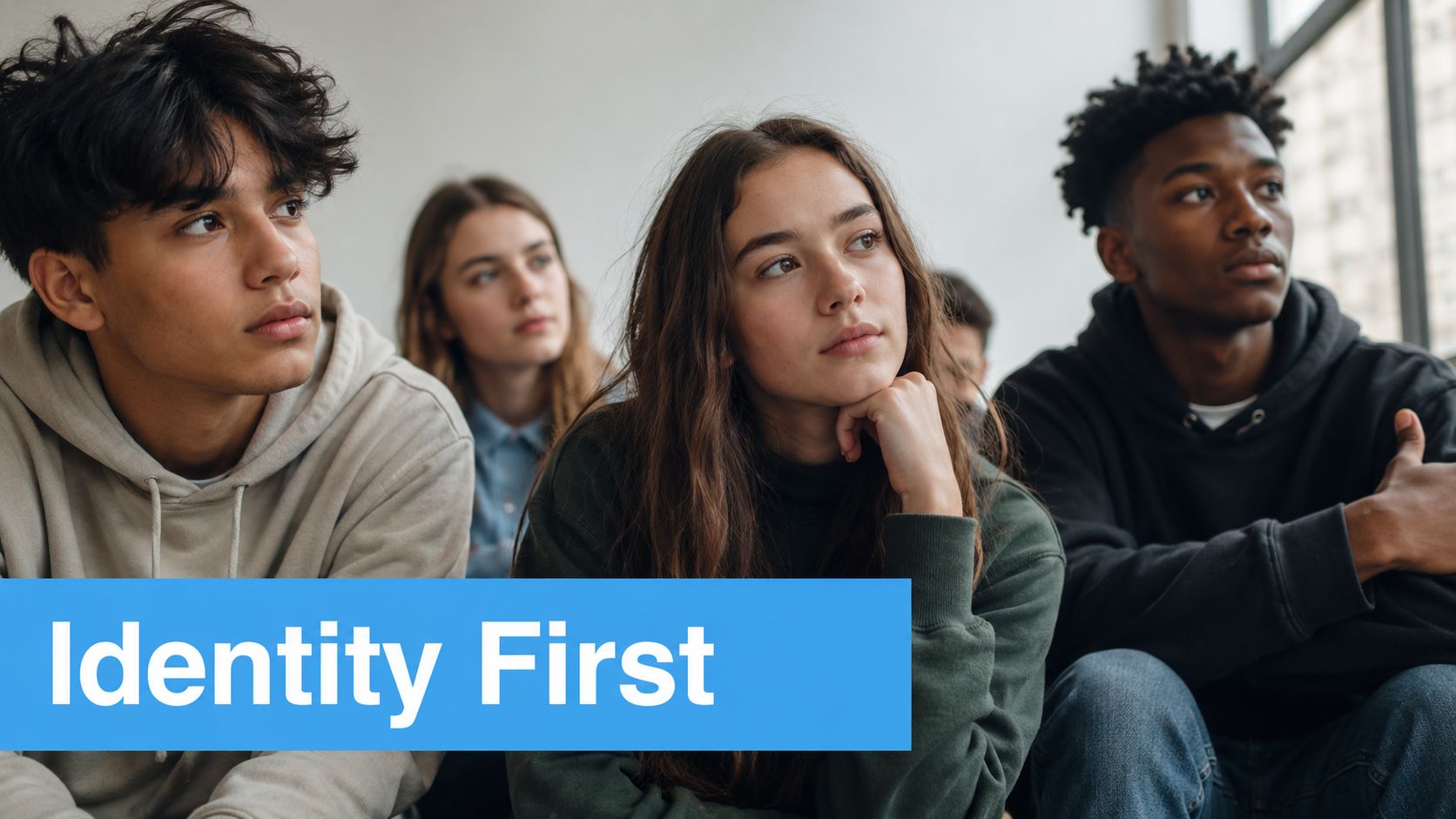
Developmental Milestones That Should Shape Your Program
Teen leadership programming needs to bend around development, not around adult convenience. Early adolescents, middle adolescents, and late adolescents are not the same audience wearing different shoes. Their attention spans, risk tolerance, social sensitivity, and identity needs shift enough that one session format can't serve all three groups equally well.
Age bands change what teens can absorb
For ages 11 to 14, belonging comes first. Teens in this band tend to be highly peer-oriented and sensitive to status, so sessions work best when they feel safe, low-stakes, and familiar. Adult warmth matters more than adult polish here. If you open with complex debate or high-pressure speaking drills, many teens will go quiet and start protecting themselves instead of practicing.
For ages 14 to 16, experimentation increases. Abstract reasoning starts to deepen, and teens are willing to try on different versions of themselves. That's the right moment for reflection journals, small-group service tasks, and structured autonomy. They need enough freedom to test judgment, but enough scaffolding to avoid chaos.
For ages 16 to 19, values and future orientation become more coherent. These teens can carry more responsibility, mentor younger cohorts, and work on projects that have real community stakes. If you still run everything like a supervised game at that stage, you'll underuse them.
A practical planning note from youth-program operations sits well here, especially for directors balancing staffing, consent, and scheduling. Managing youth development programs is where the operational side starts to matter as much as the curriculum itself.
| Developmental Milestones and Program Design Implications | ||
|---|---|---|
| Age Band | Key Milestones | Program Design Implications |
| 11 to 14 | Peer sensitivity, status awareness, concrete thinking | Use belonging rituals, short practice rounds, and warm adult coaching |
| 14 to 16 | Identity exploration, growing abstract thought, more risk tolerance | Add reflection, small autonomy, and challenge-based teamwork |
| 16 to 19 | Values consolidation, future focus, readiness for responsibility | Use capstones, peer mentoring, and community-facing work |
If the session pitch sounds like a college seminar, it's probably too advanced for younger teens and too thin for older ones.
The diagnostic test is simple. Ask whether your program gives each age band something developmentally appropriate to do, not just something developmentally appropriate to hear.
Building the Inner Foundation Through Mindfulness and Reflection
Self-regulation is the upstream skill that a lot of teen leadership programs skip. Teens can't consistently lead a team, give feedback, or stay composed in conflict if their attention is scattered and their reactions run the room. Mindfulness isn't a wellness add-on here. It's a training method for attention, impulse control, and emotional labeling.

Why the inner work belongs in leadership training
In early adolescents, dispositional mindfulness has been associated with executive function proficiency, and when mindfulness was added to the model it was associated with executive function at β=0.64, p<.001 (PubMed). A randomized controlled trial of an 8-week mindfulness-based intervention in very preterm young adolescents found significant post-intervention improvements in everyday executive functioning, with parent-reported Global Executive Composite and Metacognition Index change scores both significant at p=0.002 and p<0.001 (PMC). Those findings matter because they point to something practitioners see all the time. When teens can pause, notice, and reset, their leadership behavior gets more usable.
A classroom-friendly routine doesn't need to be elaborate. Start sessions with a two-minute breath anchor, move into the main activity, then end with a brief reflection prompt tied to what happened. Reflection after action works better than reflection as filler. Teens have something real to process, and the meaning lands faster.
A few routines tend to hold up well in cohorts:
- Breath anchor at open: Two minutes to settle, especially after school or sports.
- Body-scan debrief after conflict practice: Helps teens name tension before it becomes defensiveness.
- Values audit journal: One question each week, asking where behavior matched values and where it didn't.
- Challenge reflection: Short written prompts after a role-play or service task, not before.
For a broader internal reference point on meditation practice, this internal collection can be useful: https://gamayaa.com/tag/mindfulness/
Don't turn mindfulness into a lecture about calm. Keep it tied to decision-making, focus, and recovery after stress.
The objection that teens will dismiss this as “woo” usually comes from adults presenting it as therapy. Present it as skill practice, keep the language plain, and use five to ten minutes per session. That's enough to build the habit without swallowing the whole program.
Designing a Curriculum That Actually Changes Behavior
A curriculum changes behavior when it stacks three layers in the right order, identity work, relational practice, and applied challenge. Skip the order and the program starts to feel like disconnected activities. Keep the order and teens get a path from self-concept to skill to action.
A simple weekly rhythm that works
A 90-minute session can stay tight if every block has a job:
- 10 minutes of mindfulness
- 25 minutes of a concept mini-lesson
- 35 minutes of a skill drill
- 20 minutes of project-team work
That sequence matters. Calm the room first, teach one idea, rehearse one skill, then let teens apply it to something that has consequences. If you reverse it, the reflection becomes abstract and the drill becomes performative.
The mentoring structure should be layered too. Use one-to-one adult mentoring every other week, pair teens one year apart for near-peer mentoring, and keep group mentoring circles of six for belonging and accountability. Each format does a different job. Adults help with identity and judgment, near-peers normalize struggle, and circles create social pressure that can be healthy when the facilitator keeps the tone disciplined.
| 12-Week Curriculum Session Map | ||||
|---|---|---|---|---|
| Week | Theme | Skill Focus | Activity | Deliverable |
| 1 | Intake and self-concept | Self-awareness | Baseline reflection and group norms | Personal leadership snapshot |
| 2 | Leadership as learnable | Values clarity | Story-sharing and identity mapping | Values statement |
| 3 | Attention and presence | Self-regulation | Breath anchor and listening drill | Reflection log |
| 4 | Communication under pressure | Active listening | Paired feedback practice | Peer feedback note |
| 5 | Leading a meeting | Facilitation | Mock meeting with rotating roles | Meeting plan |
| 6 | Conflict and reset | De-escalation | Scenario-based practice | Conflict response script |
| 7 | Community listening | Empathy | Stakeholder interview prep | Interview questions |
| 8 | Project framing | Problem-solving | Team challenge planning | Project brief |
| 9 | Service project build | Collaboration | Fieldwork or prototype work | Midpoint update |
| 10 | Revision | Accountability | Feedback round and improvement plan | Revised project plan |
| 11 | Presentation rehearsal | Confidence and clarity | Dry run with critique | Final presentation draft |
| 12 | Community panel | Synthesis | Presentation and reassessment | Final reflection |
What the hard moments sound like
When a teen shuts down after criticism, don't argue for the feedback. Say, “Take a minute, then tell me which part you can use this week.” When a team starts blaming one person, stop the group and redirect to shared ownership. When energy drops, narrow the task. Teen cohorts usually don't need more enthusiasm. They need clearer next steps.
An 8-week capstone works well because it forces teens to identify a local problem, interview stakeholders, prototype a response, and present to a community panel. That sequence gives them a reason to care without pretending every project will be glamorous.
Comparing Mentoring, Peer Learning, and Service Projects
Different delivery formats change different things, and that's where a lot of programs go wrong. A format that builds confidence may not build follow-through. A format that creates belonging may not produce responsibility. Good program design chooses the method based on the outcome, not on what looks easiest to schedule.
What each format is good at
Adult mentoring is strongest for relational depth and identity work. Teens often disclose more, ask better questions, and take correction more seriously with one trusted adult. The downside is scale. It takes careful screening, matching, and consistency. For any adult-facing role, a tutor background check is worth treating as part of the onboarding baseline, not as an afterthought.
Peer cohort learning builds belonging fast. Teens see that other people are anxious, awkward, or unsure too, which reduces shame and boosts participation. The risk is social loafing if facilitation is weak. If nobody owns the room, the loudest teen sets the tone.
Service-project immersion gives teens real stakes. They can see a problem, talk to people affected by it, and build something that matters. That's where civic identity becomes concrete. It also needs adult scaffolding, because community work without structure can drift into busywork.
Blended online-plus-onsite formats widen access and extend content between sessions. They're useful when you need repetition or when transportation is a barrier. They fail when the digital piece replaces embodied practice instead of reinforcing it.
| Delivery Method Comparison | ||||
|---|---|---|---|---|
| Method | Dosage (hrs) | Cost/Participant | Strongest Outcome | Main Failure Mode |
| Adult mentoring | Ongoing, usually low-hours but repeated | Moderate to high depending on screening | Identity and trust | Scaling and matching |
| Peer cohort learning | Session-based, moderate hours | Lower per teen | Belonging and communication | Social loafing |
| Service projects | Project-dependent, often the highest contact load | Variable | Civic identity and execution | Weak partnerships |
| Blended online-plus-onsite | Flexible, can extend beyond sessions | Often lower travel burden | Reach and reinforcement | Passive consumption |
The format is only as strong as the behavior it forces into the open.
If you want teens to practice initiative, you need a format that asks them to initiate. If you want them to practice repair, you need a format that creates small failures they can recover from. That's the comparison lens.
Measuring Growth Without Fooling Yourself
Teen leadership programs fail their own evaluations when they rely only on attendance, smiles, or end-of-program satisfaction forms. Those measures tell you the room was pleasant. They don't tell you whether behavior changed. A sound assessment design needs baseline, endline, and follow-up, and it needs to look at both self-report and observed behavior.
What to measure and when
A practical sequence is pre, post, and follow-up at six months. At baseline and again at each check-in, use a mix of validated self-report tools and program-specific logs. The most useful anchors are the Leadership Practices Inventory (Student), Rosenberg Self-Esteem Scale, Brief Resilience Scale, and a short civic-identity measure, plus a behavioral frequency log you design around your program goals.
Self-report works best when it's paired with something observable. Use structured case prompts, peer feedback rounds, and facilitator rubrics for facilitation, conflict navigation, and project execution. That way, a teen who says they're more confident also has to show how they handle disagreement or lead a meeting.
The trial evidence from adolescent leadership programming also warns against overreading the full sample. In one randomized controlled trial, overall self-esteem and self-efficacy did not improve significantly versus control, but subgroup analysis showed that female students improved in self-esteem by 2.38 points versus -0.24 in controls and in self-efficacy by 1.32 versus -0.04 (PubMed). The lesson is straightforward. A program can look flat on average while still helping a specific group.
How to avoid false confidence in your data
Watch for social desirability bias, ceiling effects, and the gap between stated intent and observed behavior. Confident teens often give flattering answers because they know what leaders are supposed to sound like. That doesn't mean they changed.
Subgroup analysis should be part of the plan, not a rescue operation. Compare outcomes by gender, race, prior leadership experience, and attendance tier. If you want an effect size, compare the post minus pre change in the program group against the same change in the control or comparison group. That keeps you honest about whether the gains are real or just part of normal growth.

A 12-Week Rollout Plan and Final Checklist
The cleanest rollout is sequenced, not crowded. Weeks 1 and 2 establish identity baselines and trust. Weeks 3 through 5 build mindfulness and reflection habits. Weeks 6 through 8 layer skills work with mentoring and group challenges. Weeks 9 through 11 move into community project execution, and week 12 closes with presentations and reassessment.
A practical rollout sequence
Start with intake conversations that ask what teens think leadership means, where they feel effective, and where they usually freeze. Use that to anchor the baseline. Then spend the next three weeks on presence, attention, and reflection so the group has a shared language before you start asking for higher-stakes behavior.
Once the room can listen and reset, move into skills labs. Active listening, feedback, running a meeting, and de-escalating conflict are enough to keep a cohort busy if the practice is repeated. Near-peer pairs and adult mentors should be active by this point, because teens will start revealing different needs once the novelty fades.
The project block should not appear too early. By week 9, teams can handle a real community service project with adult advisors, because they've already practiced how to disagree, revise, and stay engaged. The final presentation should feel like a public handoff, not a talent show.
Final checklist
- Stakeholder sign-off: Confirm who approves the curriculum, the calendar, and the project site.
- Consent handling: Keep parent and guardian paperwork clear, readable, and on time.
- Mentor screening: Match adults carefully and verify they can show up consistently.
- Safety protocols: Review transportation, supervision, emergency contacts, and meeting-space rules.
- Accessibility accommodations: Build in support for language, schedule, mobility, and neurodiversity needs.
- Data cadence: Collect baseline, midpoint, endline, and follow-up data.
- Attendance backup plan: Decide what happens if a teen misses too much or a mentor drops.
- Project rescue plan: Define a fallback if the service project stalls.
- Assessment pacing: Keep reflection short enough that teens don't stop taking it seriously.
If week 4 gets shaky, don't panic and add more content. Tighten the session, simplify the tasks, and make the next win visible. If mentor-student matching feels off, change the match early. If the project stalls, reduce scope and restore momentum.
The strongest teen leadership programs are not the busiest ones. They're the ones that sequence identity, mindfulness, practice, and real responsibility in a way a single program director can run.
NineArchs LLC helps organizations build the operational backbone that programs like this need, from staffing support and workflow management to the systems that keep delivery consistent. If you're building leadership development for teens and want help with scalable program operations, visit NineArchs LLC to explore how their team can support the work.