
Growth exposes support problems fast. Tickets stack up. Calls wait too long. Your best internal people spend their day putting out service fires instead of improving the business. Hiring locally can help, but it often turns into a slow, expensive cycle of recruiting, training, attrition, and patchwork scheduling.
That's usually when leaders start looking at a philippines call centre.
The mistake is treating that decision as a pure labor arbitrage play. Cost matters, but cost alone won't protect customer experience, service levels, or operational continuity. If the provider can't hire at volume, manage quality, support multiple channels, and adapt to AI-driven workflows, cheap labor becomes expensive very quickly.
A better way to evaluate the market is to ask a harder question. Can this partner help you scale without losing control?
That means looking beyond rate cards. You need to understand the depth of the Philippine talent market, the actual service models on offer, how modern call centres blend human agents with automation, and what due diligence separates a stable operation from a fragile one. You also need to decide whether you want to manage an offshore vendor relationship directly or work through a U.S.-based outsourcing partner that handles oversight, alignment, and accountability closer to home.
The Philippines remains one of the strongest options in global outsourcing, but the reasons have changed. The strongest programs now win on execution, resilience, and operating design, not just hourly savings.
Introduction Scaling Beyond Your Limits
Most companies don't start searching for outsourced support because everything is going well. They start when growth outpaces infrastructure.
A sales push works. Orders rise. Customer inquiries spread across phone, email, chat, and social channels. Suddenly, the support team that handled yesterday's volume can't keep up with today's expectations. Response times slip. Training gets rushed. Supervisors spend more time filling seats than improving service.
That's where a philippines call centre becomes a strategic option instead of a tactical fix.
The right outsourcing model helps a business add capacity without rebuilding an entire support organization in-house. It can also create breathing room for leadership. Instead of managing every schedule change, coverage gap, and hiring backlog, the business can focus on product, revenue, retention, and service design.
What usually breaks first
In practice, the first warning signs are rarely dramatic. They're operational.
- Coverage gaps: Support demand expands faster than internal teams can staff evenings, weekends, or overflow periods.
- Inconsistent quality: New hires get onboarded too quickly, so answers vary by shift and by channel.
- Manager overload: Team leads become schedulers, recruiters, and escalation handlers all at once.
- Rising internal cost: Local hiring, office space, and management layers push support costs upward before service improves.
Practical rule: If customer support is absorbing management attention that should be going into growth, you don't have a staffing issue alone. You have an operating model issue.
A mature outsourcing market can solve that problem, but only if you approach it with clear requirements. You're not buying generic labor. You're choosing a delivery model that has to protect customer trust while scaling with the business.
Why the Philippines Is a Global BPO Powerhouse
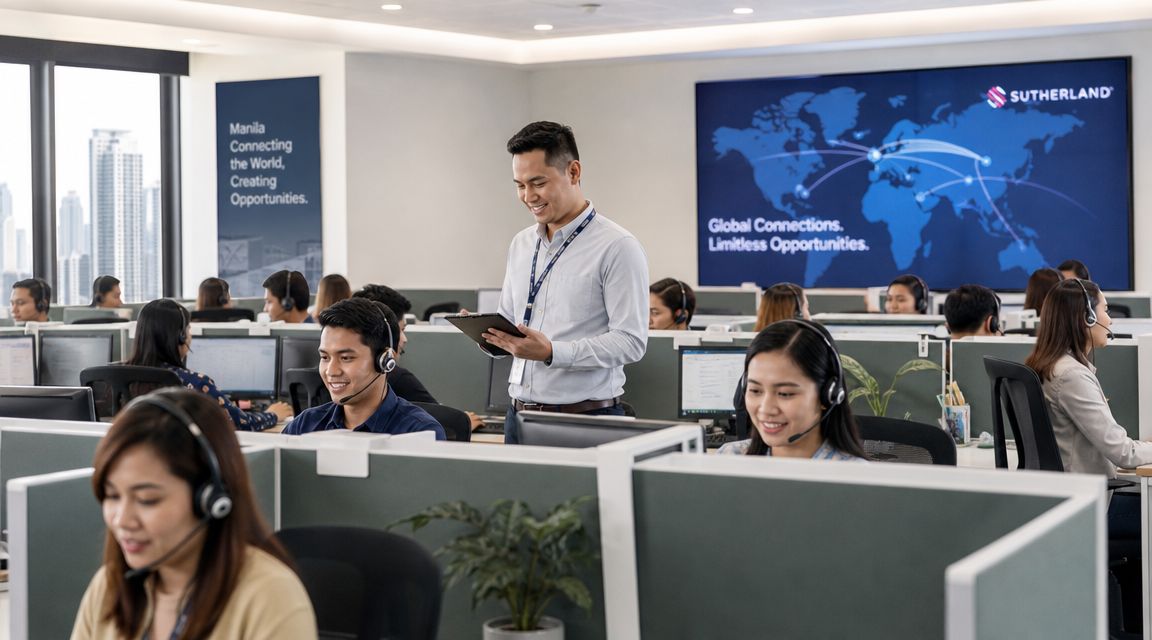
The Philippines isn't relevant because it's merely affordable. It matters because it operates at national scale.
The country's call center industry reportedly held more than 16% of the global outsourcing market, employed about 1.8 million experts, and generated roughly $38 billion annually for the Philippine economy, according to Flatworld Solutions on the Philippines call center industry. For a buyer, those figures point to something more important than price. They show a labor market deep enough to support sustained hiring, layered management, and long-term delivery.
Scale changes the buying equation
In smaller outsourcing markets, one failed hiring wave can stall a launch. In the Philippines, the deeper talent pool gives buyers more flexibility.
That doesn't mean every provider is equal. It means the market itself has enough maturity to support:
- Rapid team formation for customer support, back-office work, and voice operations
- More specialized hiring when a program needs technical support, finance process handling, or industry-specific workflows
- Operational continuity because the outsourcing sector has already built management, training, and workforce practices around large client demand
A lot of businesses first learn the basics through introductions to business process outsourcing models and use cases. That helps. But the Philippines stands out because the market isn't experimental. It's established.
It's built for more than low-cost labor
The strongest reason to consider a philippines call centre is that the ecosystem has grown past the old offshore stereotype. Buyers aren't just accessing labor. They're entering a market where customer service delivery has been a core business capability for years.
That maturity shows up in hiring pipelines, manager availability, and client familiarity with Western service expectations. It also supports different real estate and operating models. For companies that want more flexibility in how offshore teams are housed, resources on how to reduce capital expenditure with flexible workspace can help frame what a scalable setup looks like before a full facility commitment.
The Philippines works best when a company needs repeatable service delivery, not just a cheaper answer queue.
Why leaders keep returning to this market
Three practical factors usually drive the decision.
| Decision factor | Why it matters in practice |
|---|---|
| Workforce depth | Hiring doesn't depend on a tiny local talent pool |
| Market maturity | Providers are used to supporting global clients with structured operations |
| Economic significance | The industry is large enough to support long-term outsourcing relationships |
If you need a support function that can grow with demand, the Philippines remains one of the few markets where scale, familiarity, and operational infrastructure come together in one place.
Deconstructing Modern Call Centre Services
The modern philippines call centre doesn't start and end with phone support. That view is outdated.
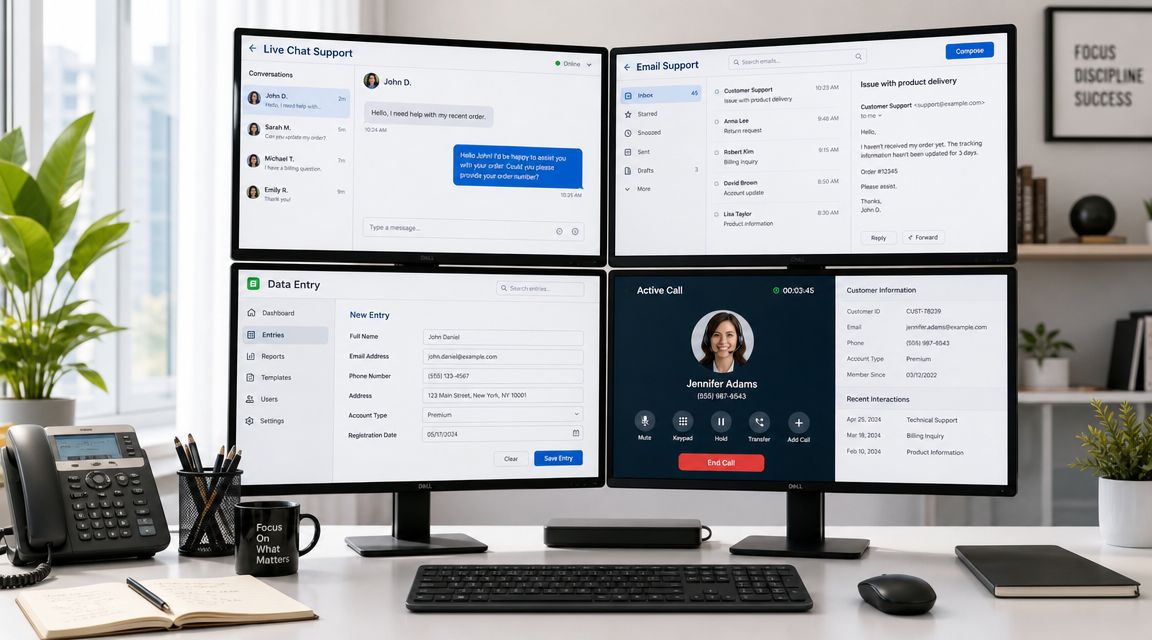
The service mix is much broader now. The Philippine call center industry evolved from simple email response services into a platform serving travel services, technical support, education, financial services, customer care, and both B2C and B2B support, as outlined in Wikipedia's overview of the call center industry in the Philippines. For buyers, that history matters because it shows a market that learned to handle more complexity over time.
Inbound work is broader than customer service
Inbound teams often handle the most visible part of the customer experience. That includes order support, account questions, complaint resolution, appointment handling, and technical troubleshooting.
For some companies, inbound support is also the first point of retention. A well-trained agent can calm a frustrated customer, clarify a policy, or recover a sale. A poorly trained one can lose the account in a single interaction.
Common inbound functions include:
- Customer care: Billing questions, returns, delivery concerns, and general account help
- Technical support: Guided troubleshooting, ticket triage, and escalation handling
- Service coordination: Scheduling, dispatch support, reminders, and follow-ups
If your team is still defining core voice workflows, a primer on voice process roles in BPO operations can help clarify how these programs are commonly structured.
Outbound and back-office services often matter just as much
Some businesses only think about inbound support when evaluating providers. That leaves a lot of value on the table.
A strong provider may also support outbound calling for follow-up campaigns, surveys, appointment confirmation, collections support, or lead qualification. On the non-voice side, teams can handle data entry, documentation workflows, transaction processing, content review, and other administrative tasks that slow down internal staff.
Operating design proves critical. If your outsourced team handles both customer-facing and back-office work, handoffs need to be mapped tightly. Otherwise, you create a split process where one team answers the customer and another team fixes the issue two days later.
Buyers get better results when they outsource complete workflows, not isolated tasks.
Omnichannel is now the baseline
Many leaders still ask whether they need phone, chat, or email support. In practice, they usually need all three, plus a process that keeps context intact across channels.
That's why workspace and process design matter. Even something as practical as optimizing call center office layouts affects supervision, noise control, coaching access, and team performance in a live service environment.
A modern service stack should let agents move between channels without losing customer history. When that doesn't happen, customers repeat themselves, verification gets duplicated, and handle times rise for no useful reason.
Understanding Costs and Staffing Models
Cost is one reason companies consider a philippines call centre, but bad cost analysis creates bad contracts.
The simplest benchmark is labor. Philippine call center agents typically earn about $8 to $14 per hour, compared with about $22 to $35 per hour for similar U.S. roles, based on the market summary cited earlier in this guide. That gap explains why companies look offshore in the first place. It does not tell you what your actual outsourcing agreement should look like.
The pricing model shapes the relationship
Three models show up most often.
| Staffing model | Best fit | What to watch |
|---|---|---|
| Per-agent per-hour | Variable demand, shift coverage, pilot teams | Can drift if utilization is poorly managed |
| Dedicated monthly agent | Stable workloads and repeat processes | You need enough volume to keep agents productive |
| Performance-based pricing | Narrow, measurable tasks | Risk rises if incentives distort quality |
Per-hour pricing gives flexibility. It works well when demand changes by day or season. The trade-off is that you need strong reporting and active workforce management, or you'll pay for idle time.
Dedicated staffing works better for ongoing support, account work, and process-heavy functions. It creates more ownership because agents become part of a standing team. It also gives you more continuity in training and quality.
Ask what the rate includes
Two proposals can quote similar pricing and deliver very different value.
Before you compare providers, ask whether the rate includes:
- Agent compensation
- Team lead or supervisor oversight
- Basic recruitment and onboarding
- Standard reporting
- Core workstation and facility overhead
Then ask what sits outside the base fee.
Those items often include specialized software, custom reporting, complex process documentation, client-specific training, after-hours management coverage, or additional quality assurance layers.
A low rate with thin supervision usually costs more later through rework, escalations, and customer churn.
Don't buy on wage gap alone
The wage advantage is real. But the practical question is whether the operating model turns that advantage into stable service.
The right staffing plan matches labor level to task complexity. You don't want premium agents doing repetitive administrative work all day, and you don't want lightly trained agents handling sensitive escalations. Good outsourcing economics come from role design, not just lower wages.
Selecting Your Ideal Outsourcing Partner
Vendor selection is where many outsourcing projects succeed or fail.
A provider can look strong in a proposal and still struggle in live operations. The issue usually isn't one dramatic weakness. It's a cluster of small misses. Weak onboarding. Thin middle management. Limited schedule flexibility. No real continuity plan. Those problems don't show up in a sales deck. They show up after launch.
One practical risk in the Philippines is concentration. Many call centres are concentrated in Metro Manila, so buyers should evaluate a provider's geographic diversification and business continuity planning, as noted by Hit Rate Solutions on the Philippine call center market. If delivery depends too heavily on one location, a localized disruption can become your customer service problem.
What to test before you sign
Use the selection process to pressure-test execution, not just promises.
- Recruitment capability: Ask how the provider hires for your exact role profile, not generic customer service seats.
- Training discipline: Review how process knowledge, call handling, and escalation rules are documented and reinforced.
- Supervision depth: Confirm who coaches agents daily, who owns performance, and how quality feedback reaches the floor.
- Resilience planning: Look for distributed delivery, continuity procedures, and a realistic response plan for disruptions.
- Technology alignment: Make sure the team can work within your systems without introducing unnecessary process friction.
A lot of leaders also study broader frameworks for how to scale customer service operations before finalizing vendor criteria. That's useful because scaling isn't just adding agents. It's designing management, reporting, and escalation paths that can hold under pressure.
Why a U.S.-based partner changes the risk profile
This is one of the most practical decisions in the process.
You can contract directly with an offshore provider. That can work. But many businesses underestimate the management burden. Time zone friction, communication gaps, contract interpretation, and performance accountability can become harder to manage when every issue has to cross borders.
A U.S.-based outsourcing partner adds a layer of control that many companies need. It usually improves communication cadence, simplifies commercial alignment, and gives leadership a domestic point of accountability for offshore execution.
That matters most when:
- Internal management bandwidth is limited
- The program touches sensitive customer experience workflows
- You need faster escalation handling
- You want closer oversight without building an offshore management structure yourself
If your team has never managed offshore delivery directly, a U.S.-based partner often reduces avoidable mistakes in the first year.
The best partner doesn't just source talent. They shape the engagement, challenge weak assumptions, and keep the operation aligned with business goals after go-live.
Navigating Data Security and Compliance

Data security is where casual outsourcing decisions become dangerous.
If a philippines call centre will touch customer records, payment details, health information, internal systems, or account credentials, security has to be built into the operating model from day one. It can't sit in a policy binder that nobody uses after kickoff.
The pressure is higher now because the sector is adjusting to AI at the same time. Reporting on the market notes that the BPO industry faces pressure from AI, and leading Philippine call centers are shifting toward AI-driven solutions, automation, and analytics. It also highlights that vendor selection should include how the provider manages the human plus AI model while controlling emerging data risks, according to SCMP's reporting on AI pressure in the Philippine outsourcing sector.
Security controls should match the workflow
A lot of companies ask whether a provider is compliant. That's too broad.
A better question is how the provider protects data inside the actual workflow. For example, an email support team has different exposure points than a voice team processing payments or a back-office team handling customer records. The controls need to match the process.
Look for evidence of discipline in areas such as:
- Access management: Agents should only reach the systems and fields needed for their role
- Session control: Sensitive workflows should limit copying, local storage, and unauthorized transfers
- Monitoring practices: Supervisors and security personnel should be able to review exceptions and investigate issues
- Escalation paths: Security incidents need a defined chain of responsibility, not improvised responses
AI increases both capability and risk
Automation can improve consistency, queue handling, summarization, and routing. It can also create new exposure if teams push customer data into poorly governed systems.
That's why the question isn't whether a provider uses AI. It's whether they use it carefully.
Ask direct questions:
| Area | What you should ask |
|---|---|
| Data use | What customer data enters automated workflows, and why? |
| Human review | Which outputs require agent or supervisor validation? |
| Retention | How is sensitive information handled, stored, and restricted? |
| Exception handling | What happens when an automated recommendation is wrong? |
Strong providers treat AI as a controlled layer inside operations, not as a shortcut around process governance.
Compliance is operational, not decorative
If your business has industry-specific obligations, your outsourcing setup has to support them in daily practice. That includes training, permissions, auditing, reporting, and documented handling procedures.
A provider should be able to explain how compliance requirements are translated into agent behavior. If they can only speak in general assurances, keep digging. Mature operators can walk you through exactly how sensitive interactions are handled, reviewed, and contained.
Your Implementation Roadmap and Key Metrics
Launching a philippines call centre goes better when the early stages are slower and more deliberate than leaders expect.
The common mistake is rushing from vendor selection to live production. That usually creates preventable problems. Agents learn partial workflows. Escalations aren't mapped. Reporting arrives too late or in the wrong format. By the time leaders notice, the team is already handling live customers.
A better launch follows a sequence.
A practical rollout path
Discovery and workflow mapping
Define what the team will handle, what stays in-house, and where exceptions go. Weak process design becomes visible at this stage.Pilot scope and staffing plan
Start with a contained volume or function. That lets you test training quality, queue management, and supervisor responsiveness before scaling.Knowledge transfer and training
Build scripts, decision trees, escalation criteria, and sample scenarios. If the work is complex, train to judgment, not just script adherence.Systems access and reporting setup
Connect the team to the tools they need and confirm how performance data will be viewed by both sides.Controlled go-live
Launch with close monitoring, daily reviews, and clear authority to fix process issues quickly.
Modern Philippine call centers use cloud platforms and live dashboards that log each customer interaction as data, supporting SLA monitoring and same-day staffing adjustments, according to this analysis of modern Philippine call center operations. That matters because visibility is what turns outsourcing from a black box into a managed function.
Teams that want more responsive support environments often explore ideas related to real-time agent assistance in service operations, especially when quality and speed both matter.
Measure behavior, not just volume
A queue can look busy and still perform badly. You need KPIs that show whether the team is solving problems well.
Sample KPIs and SLA Targets for Call Centre Services
| Metric (KPI) | Description | Typical SLA Target |
|---|---|---|
| First Call Resolution | Measures whether the customer's issue is solved in the first interaction | Defined by client agreement |
| Average Handle Time | Tracks the time agents spend handling each interaction | Defined by client agreement |
| Customer Satisfaction | Captures how customers rate the service they received | Defined by client agreement |
| Service Level | Measures response performance against agreed queue targets | Defined by client agreement |
| Quality Assurance Score | Evaluates adherence to process, compliance, and service standards | Defined by client agreement |
What good oversight looks like
Good governance is simple and frequent.
- Daily reviews catch staffing issues, system friction, and repeat customer pain points.
- Weekly performance reviews connect metrics to coaching and process fixes.
- Monthly business reviews should focus on trends, not just snapshots.
If the reporting only tells you what happened yesterday, it's incomplete. The point of measurement is to improve the next shift, the next week, and the next hiring plan.
Take the Next Step to Scale Your Operations
A philippines call centre can give a growing business something internal teams often struggle to build quickly on their own: scalable service capacity, broader channel coverage, and access to a mature support talent market.
But the best outcomes don't come from choosing the lowest quoted rate. They come from choosing the right operating model. That means matching service scope to the right staffing structure, checking resilience beyond one delivery hub, and making sure security, reporting, and AI usage are managed with discipline.
Many companies also benefit from working through a U.S.-based outsourcing partner rather than trying to manage offshore delivery entirely on their own. That approach usually improves communication, simplifies oversight, and lowers execution risk during ramp-up.
If you're ready to build a more resilient support operation, now is the time to evaluate the model carefully and move with a clear plan.
Ready to scale your business with a world-class team? Contact NineArchs LLC today for a consultation. Call us at (310)800-1398 / (949) 861-1804 or email info@ninearchs.com.