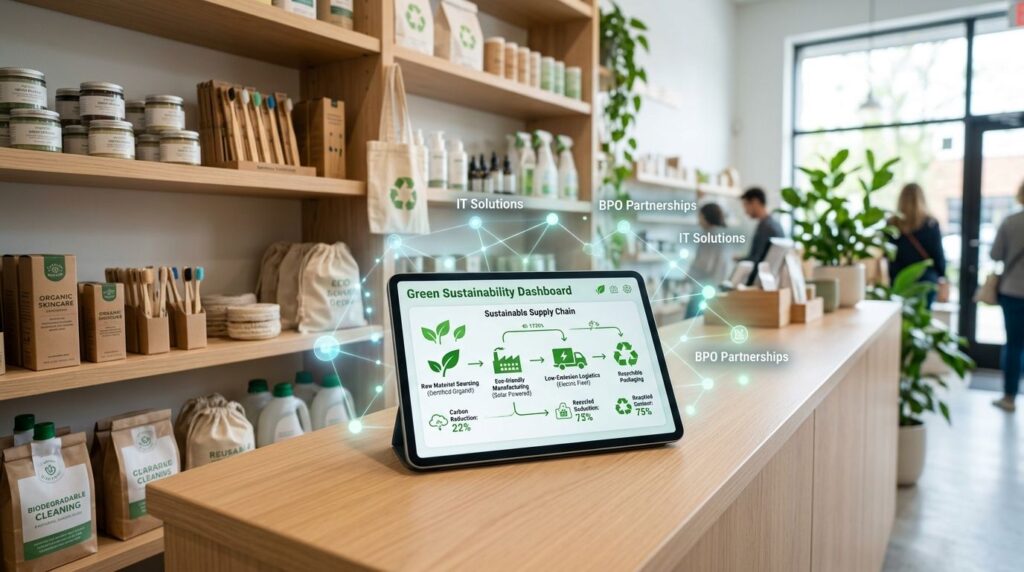
A lot of retail leaders are in the same spot right now. Customers are asking tougher questions about sourcing, packaging, waste, and returns. Finance is watching margins closely. Operations is trying to keep shelves stocked without creating excess inventory. Meanwhile, the team that's supposed to manage all of this is often already overloaded.
That tension is why sustainability in retail industry has become a practical management issue, not just a brand message. Most retailers don't fail because they don't care. They stall because the work quickly turns technical. Someone has to collect the data, connect systems, fix reporting gaps, support cloud infrastructure, and build tools that turn sustainability goals into daily operating decisions.
For most SMEs and many enterprises, the fastest path isn't a major capital project. It's a focused outsourcing model. When software development, remote IT support, and back-office processes are handled by a capable USA-based partner, retail teams can move from vague intent to measurable execution without building a large internal department first.
The Modern Retailer's Sustainability Dilemma
A regional retailer I've seen this play out with had the same problem many businesses face. The leadership team wanted better control over waste, shipping, and reporting, but every improvement seemed to require another system, another specialist, or another budget request. Store managers were dealing with daily operations. Finance was still cleaning up reconciliations. IT was busy keeping core systems running.
That's the core dilemma. Sustainability sounds strategic, but it lands as operational work.
Pressure is coming from every direction
Retailers are carrying environmental exposure across stores, warehousing, transport, and upstream production. The sector's activities and supply chains account for approximately 10% of worldwide greenhouse gas emissions, and the broader waste burden is severe, including textile waste often described as roughly one garbage truck of clothing being landfilled or incinerated every second according to the cited body of research summarized in this sustainable retail overview.
At the same time, large retailers are facing formal disclosure pressure through frameworks such as the EU's CSRD and CSDDD, which that same summary notes are making sustainability a core operating requirement rather than a voluntary initiative.
Most retail sustainability problems don't start with bad intentions. They start with fragmented systems, weak data discipline, and too few people owning the process.
Some leaders respond by treating sustainability as a communications project. That rarely works. A policy page and a packaging tweak won't fix poor replenishment logic, scattered supplier data, or infrastructure that no one is actively optimizing.
What practical retailers do instead
The retailers that make progress usually narrow the problem first. They define where technology can remove waste, where support can be outsourced, and which workflows must become more reliable before public claims get more ambitious.
A helpful starting point is to ground the effort in the broader idea of discover environmental stewardship. That framing matters because it moves the conversation beyond one-off green gestures and toward day-to-day operational responsibility.
For many companies, that's where a USA-based outsourcing partner becomes useful. You get access to software development, remote IT support, and business process capacity without waiting to hire a full internal sustainability operations team. That's often the difference between talking about change and implementing it.
Understanding the New Rules of Retail Sustainability
Sustainability in retail industry no longer means putting a recycling bin in the break room and calling it progress. Buyers now connect sustainability to product choice, delivery methods, packaging, repairability, returns, and the credibility of the retailer's reporting.
That shift has changed the commercial stakes.
Buyers expect retailers to lead
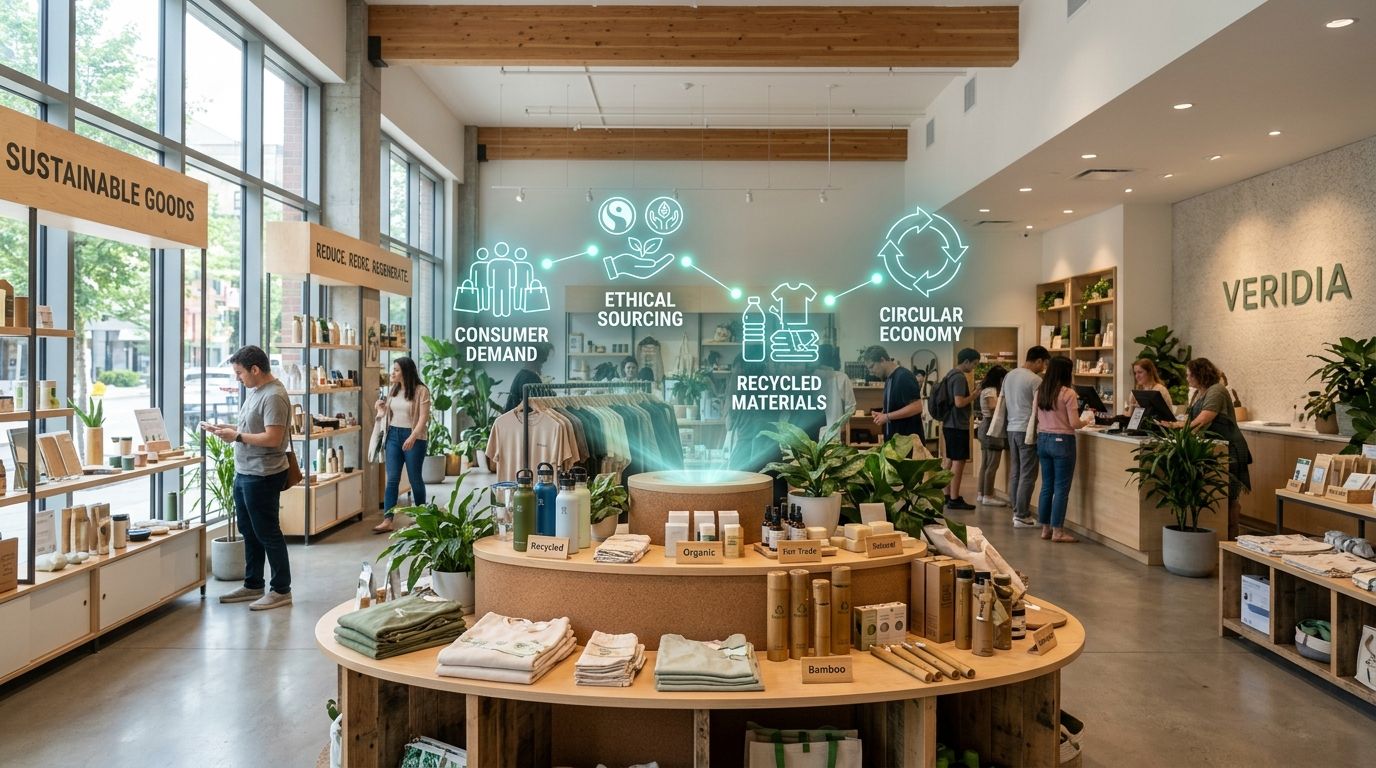
Consumer expectations have shifted decisively, with research showing that 77% of consumers hold retailers directly responsible for taking action on sustainability. This pressure translates to market performance, where sustainability-marketed products now account for 18.5% of the CPG market and drove one-third of its growth over the past decade, as summarized in this retail sustainability analysis.
That matters because many retailers still think of sustainability as optional brand positioning. It isn't. Customers increasingly treat it as part of basic retail competence.
The new operating standard is broader than stores
Retail sustainability now spans several operating layers:
- Product and supplier visibility means knowing where goods come from and whether suppliers can support the retailer's standards.
- Fulfillment and returns discipline means reducing avoidable handling, excess movement, and disposal.
- Technology lifecycle management means dealing responsibly with devices, endpoints, scanners, kiosks, and retired hardware.
- Reporting readiness means having data that finance, operations, and leadership can trust.
A lot of retailers underestimate that third point. Devices age out. Store hardware gets replaced. Back-office equipment accumulates. Businesses that want a more circular operating model should also understand practical approaches to reducing electronics waste for businesses, because retail sustainability includes the technology footprint behind the storefront.
A retailer doesn't become sustainable because it publishes goals. It gets there when sourcing, fulfillment, finance, and IT all start producing cleaner decisions.
What doesn't work
The weakest approach is to isolate sustainability inside marketing or compliance. That creates broad commitments with no systems behind them.
A stronger approach is to define sustainability as an execution issue with three tests:
| Question | Why it matters |
|---|---|
| Can the team measure it? | If not, reporting will stay subjective. |
| Can operations act on it weekly? | If not, it won't affect real decisions. |
| Can leadership see trade-offs clearly? | If not, the initiative will lose priority when budgets tighten. |
This is why retail leaders need IT and process design involved early. The sustainability agenda has moved from aspiration to operating model.
Accelerating Sustainability with Outsourced Software Development
Most sustainability improvements in retail eventually become software problems. If you want to reduce waste, you need better inventory signals. If you want cleaner supplier oversight, you need structured data. If you want resale, repair, take-back, or traceability workflows, you need systems that fit how your business runs.
Retailers often know what they want to improve. What they don't have is the internal development capacity to build it quickly and maintain it properly.
Why custom development matters
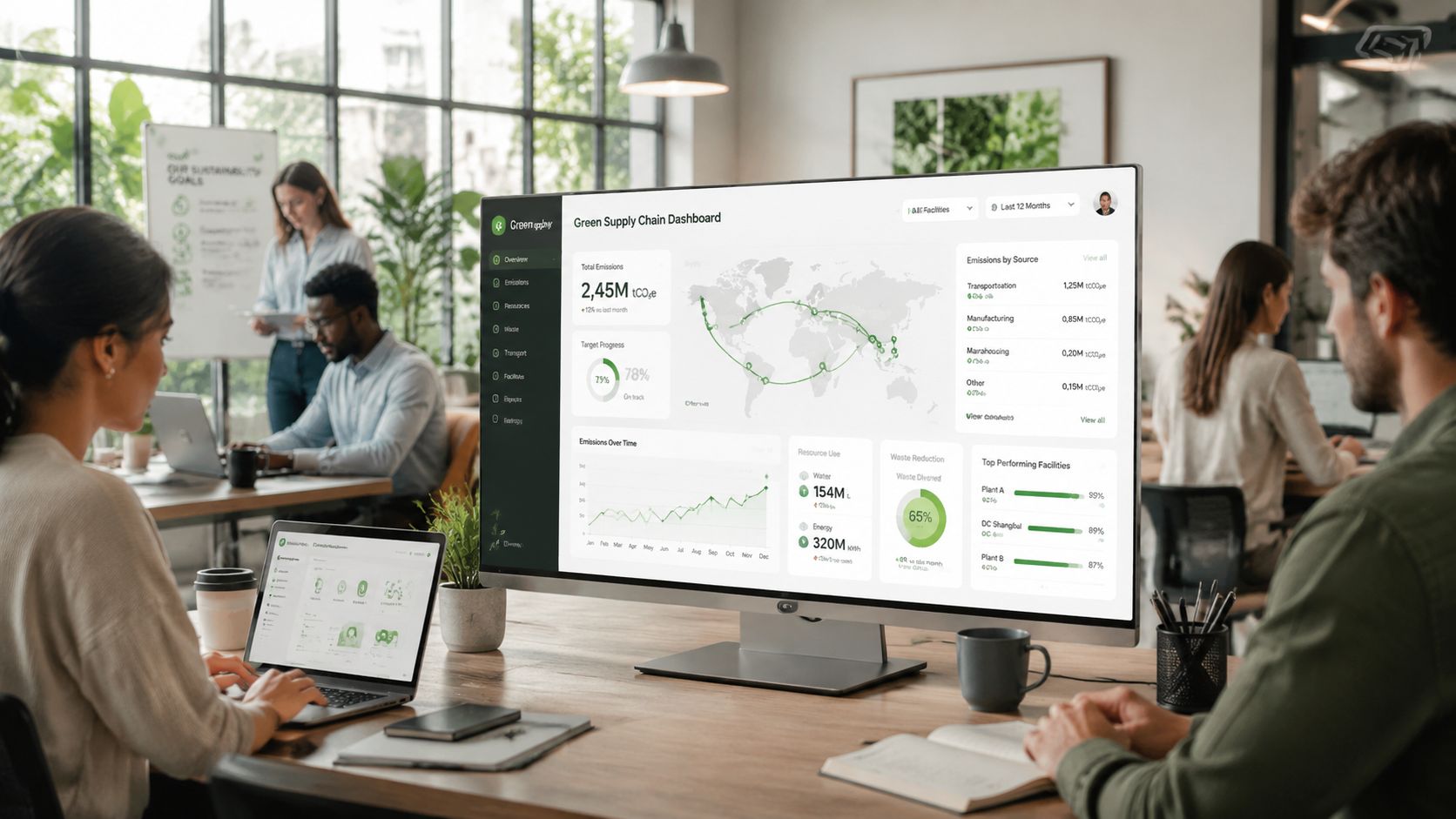
Off-the-shelf systems can help, but they rarely align perfectly with a retailer's workflows. Sustainability execution usually requires connecting inventory, finance, fulfillment, supplier records, and customer processes. That work sits in the gaps between systems.
Typical development priorities include:
- Emission-aware logistics workflows that expose transport data inside planning tools
- Inventory and returns dashboards that flag waste patterns by location or category
- Supplier intake modules that standardize questionnaires, documents, and scorecards
- Circular commerce features for repair intake, resale listing, or take-back routing
These are not vanity projects. They're the systems layer that turns sustainability goals into repeatable actions.
Why a USA-based outsourcing partner changes the economics
The biggest objection I hear is cost. That's fair. Building internal teams for cloud-native sustainability tools can be expensive, slow, and risky if the requirements are still evolving.
The economics improve when development is outsourced to a USA-registered partner. Outsourcing software development to a US-registered partner can reduce the total cost of ownership for cloud-native applications by 30–50% over three years. For a mid-size enterprise, this can mean a 25–35% reduction in cloud-infrastructure spend within the first 12 months, according to this analysis on cloud-native application economics.
That matters for sustainability because it frees up budget for the actual initiatives the software supports.
What works in practice
A good development model starts small and integrates tightly with operations. Retailers don't need a giant transformation program on day one.
A practical path often looks like this:
Start with one costly blind spot
Pick a process where waste, reporting gaps, or manual work are already visible.Build around existing workflows
Don't force teams into a redesign they won't adopt.Use cloud-native architecture from the start
That keeps scaling cleaner and avoids creating another legacy problem.Tie software work to support and maintenance
Sustainable systems need long-term ownership, not just launch delivery.
Retail leaders that need a planning framework can review approaches in a software development outsourcing guide. The principle is simple. Software development becomes much more useful when it's treated as an operational lever, not a standalone IT expense.
Building Resilient Operations with Remote IT and Cloud Support
Retail sustainability often gets discussed at the product and supply-chain level, but the IT backbone matters just as much. If infrastructure is poorly managed, cloud costs drift, devices age without a plan, support tickets pile up, and teams fall back into paper-heavy and manual workarounds.
Remote IT support fixes more than uptime. It creates the operating discipline that sustainability efforts depend on.

Infrastructure choices shape environmental outcomes
Retail supply chains are responsible for about 25% of global GHG emissions. The same Deloitte analysis notes that shifting transport from road to rail can cut emissions by 60–80%, while advanced transportation-management systems can reduce empty miles by 15–25% through route optimization, as outlined in Deloitte's sustainability in retail analysis.
Those aren't just logistics decisions. They're IT decisions too.
A retailer can't optimize mode selection, carrier performance, or route utilization if its systems don't expose the data in a usable way. That's why remote IT and cloud support matter. They keep the infrastructure stable enough for operations teams to act on better information.
What remote support should actually do
A mature outsourced support team should handle more than password resets and device troubleshooting. In retail, the sustainability impact comes from disciplined management across cloud, endpoints, collaboration, and operational systems.
Key responsibilities usually include:
- Cloud optimization by identifying over-provisioned environments and cleaning up wasteful resource use
- Endpoint lifecycle control so store and office hardware gets tracked, secured, and retired responsibly
- Workflow modernization through collaboration platforms, secure document handling, and less paper-based processing
- Operational system support for the dashboards and integrations supply-chain teams rely on
Practical rule: If no one owns cloud hygiene every month, waste will accumulate in both spending and energy use.
Why the USA-based partner model is useful
Retailers with multiple sites, distributed staff, and long operating hours need support that's responsive, accountable, and aligned with domestic compliance expectations. A USA-based outsourcing partner can coordinate remote engineering and support resources while still giving leadership a familiar governance model for security, risk, and service ownership.
That combination is especially useful when sustainability depends on consistent IT execution. Cloud migrations fail when no one tunes the environment after cutover. Paperless workflows fail when staff can't get support. Emission-aware planning fails when the underlying integrations are unreliable.
Retail leaders exploring broader infrastructure strategy can use this reference on green IT and data center planning as a way to think about the connection between architecture choices and sustainability outcomes.
Using BPO to Power Data-Driven Sustainability Decisions
Sustainability reporting often breaks down for a simple reason. The underlying business data is messy.
Finance codes don't line up across locations. Supplier records are incomplete. Payroll and scheduling data live in one place, procurement data in another, and store-level utility information is stuck in spreadsheets. Retailers then try to answer sustainability questions with information that was never organized for that purpose.
That's why BPO belongs in the sustainability conversation.
Back-office work creates reporting credibility
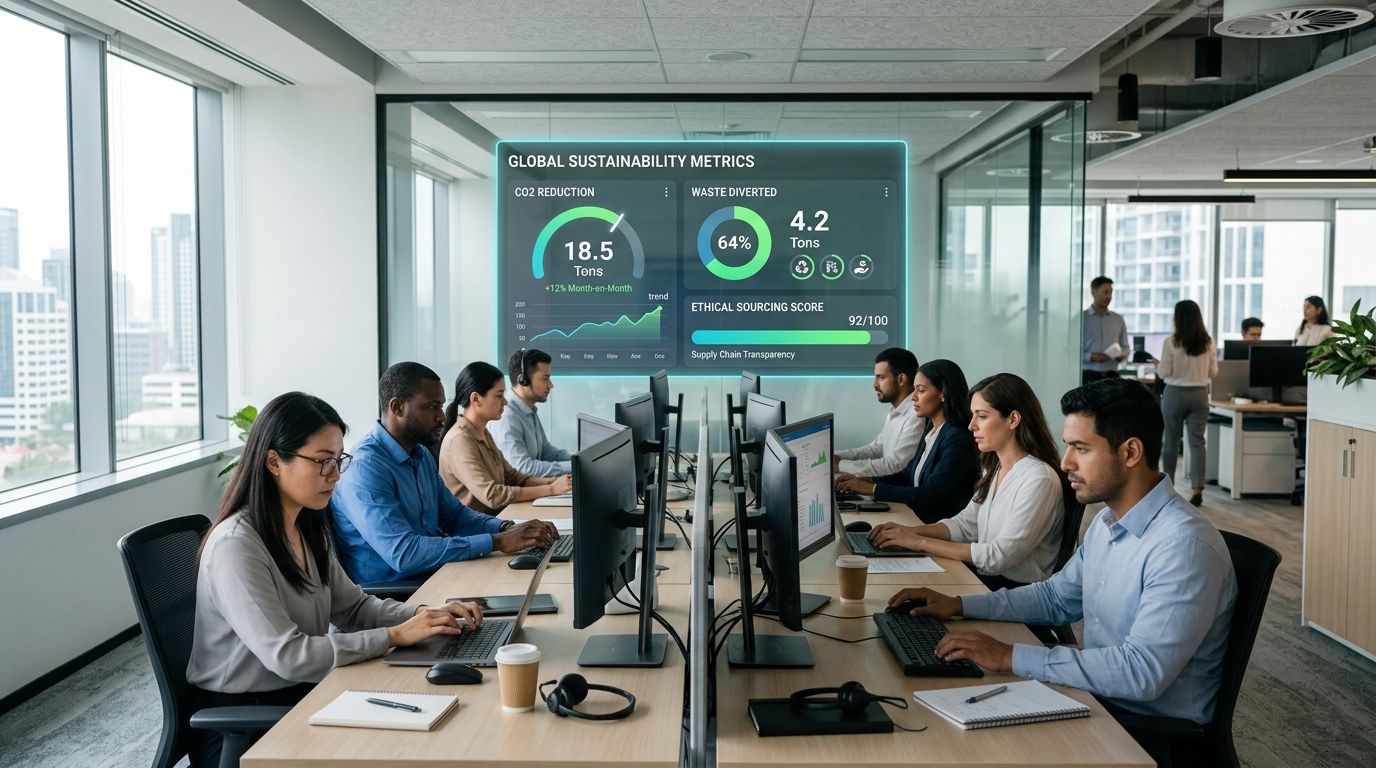
Bookkeeping, payroll, data entry, invoice handling, and reconciliation all shape the quality of management data. If those processes are inconsistent, sustainability reporting becomes anecdotal.
Outsourcing processes like bookkeeping and payroll to a US-based partner can cut administrative expenses by 30–40%. When combined with integrated IT support, this can also reduce manual reconciliation effort by up to 70%, according to this summary of sustainable business practices and outsourced operations.
That operational cleanup has a direct effect on sustainability work. Better reconciliations produce better cost allocation. Better coding improves location-level comparisons. Better data entry creates cleaner supplier and purchasing records.
The hidden link between finance operations and environmental action
Retailers usually think sustainability data starts in logistics or procurement. In practice, finance operations often determine whether the numbers are usable.
Consider where BPO supports sustainability decisions:
| Back-office process | Sustainability value |
|---|---|
| Bookkeeping | Creates cleaner cost visibility by store, channel, or function |
| Invoice processing | Helps classify utilities, freight, packaging, and services consistently |
| Payroll support | Improves labor and site reporting needed for operating comparisons |
| Data entry | Standardizes supplier and product records used in reporting |
A USA-based partner has another advantage here. Familiarity with US-GAAP expectations, payroll rules, and audit discipline helps retailers avoid building sustainability reporting on top of unreliable financial operations.
Better forecasting reduces waste before it happens
Good sustainability decisions don't only report the past. They improve planning. Once back-office processes are structured properly, retailers can connect finance and operations data to better demand and replenishment decisions.
For teams thinking about inventory and planning discipline, it's useful to review how to forecast supply chain needs. The value isn't just operational efficiency. Better forecasting typically means less over-ordering, less avoidable markdown pressure, and fewer wasted movements across the network.
Clean sustainability reporting is usually the byproduct of clean business operations. BPO helps create that foundation.
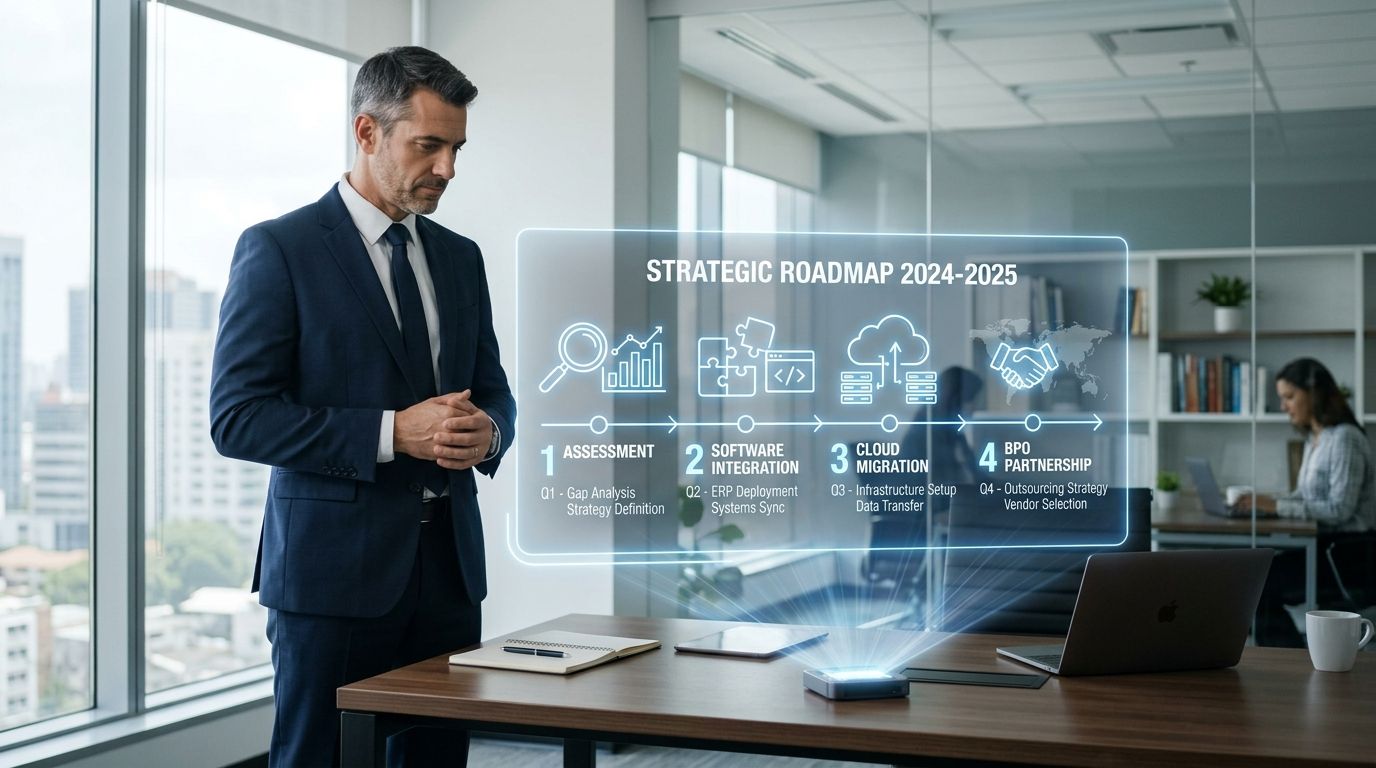
Your Practical Roadmap to an Outsourced Sustainability Model
Most retailers don't need a grand sustainability transformation plan. They need a sequence that fits real operating constraints. That means starting with data and support, then moving into targeted technology builds only after the basics are stable.
This matters especially for smaller organizations. SMEs, which make up over 90% of businesses globally, often lack the in-house expertise to implement sustainability. SME-friendly digital tools, often delivered via outsourcing partners, can reduce emissions by 10–20% in their supply chains, according to this overview of sustainable retailing for SMEs.
Phase one is data integrity
Don't start with a sustainability app. Start with the records that already drive the business.
Focus on:
- Cleaning financial inputs so costs are coded consistently
- Standardizing supplier records to reduce gaps in sourcing data
- Reducing spreadsheet dependence where operational reporting is fragile
This phase is where outsourced BPO delivers the most immediate value. It creates dependable inputs for later reporting and automation.
Phase two is operational efficiency
Once the data is cleaner, the next move is infrastructure discipline. Remote IT support should tighten the systems that retail teams use every day.
That usually includes:
- Cloud review and rightsizing to remove wasteful provisioning
- Endpoint and access governance so store and office systems stay secure and manageable
- Workflow modernization to support less paper, fewer manual handoffs, and faster issue resolution
A lot of sustainability projects fail because teams try to build new capabilities on top of unreliable infrastructure. This phase prevents that.
Phase three is targeted software development
Only after the operating foundation is stable should retailers invest in custom sustainability tools. By this stage, the team knows where better software will change outcomes.
Common priorities include:
- A supplier scoring workflow
- A dashboard for store and logistics performance
- A controlled returns or take-back process
- A management view that combines finance and operations signals
Retailers that want a low-risk starting point can evaluate phased engagement options such as a free trial for each outsourcing model. The principle is what matters. Test the working relationship, prove the operational fit, and scale from there.
Don't outsource randomly. Outsource in sequence. First the data, then the infrastructure, then the software.
What leaders should watch for
The best roadmap is the one your team will use. Watch for three warning signs:
- Too much strategy, not enough workflow detail
- Technology projects with no named business owner
- Reporting goals that arrive before the underlying data is trustworthy
A USA-based outsourcing partner helps here because coordination, accountability, and compliance expectations are easier to manage when there's a clear domestic point of ownership across BPO, software development, and remote IT support.
Start Your Sustainable Transformation Today
Sustainability in retail industry is no longer reserved for large chains with dedicated ESG departments. Retailers of all sizes can make meaningful progress when they stop treating sustainability as a standalone initiative and start treating it as an operational system built on software, support, and reliable business data.
That's why outsourcing works so well in this space. A USA-based partner can give retailers access to software development, remote IT support, and BPO capabilities without forcing a large internal buildout first. The result is a more resilient operating model, better reporting discipline, tighter infrastructure management, and a clearer path to environmental responsibility that finance and operations teams can support.
If your organization is trying to reduce waste, improve reporting, modernize systems, or build a more credible sustainability program, the next step is practical. Start with the workflows, data gaps, and infrastructure issues that are already slowing the business down. Then bring in the right outsourcing support to fix them in a structured way.
NineArchs LLC helps retailers and growing businesses turn sustainability goals into practical execution through outsourced software development, remote IT support, and business process services. If you need a USA-based partner to strengthen operations, modernize systems, and build a cost-effective sustainability model, contact NineArchs LLC at (310)800-1398 / (949) 861-1804 or email info@ninearchs.com.